 World Seed
Phytosanitary requirements by destination
Every seed shipment from Pakistan leaves with a phytosanitary certificate issued by the Department of Plant Protection (DPP) in Karachi after inspection, plus a certificate of origin from the chamber of commerce and an ISTA-format test report. What changes by destination is the import-side paperwork: permits, registrations, pre-notifications and additional declarations. The table lists them for the 20 countries that take most Pakistani seed. Country pages under sowing guides carry the local sowing calendar.
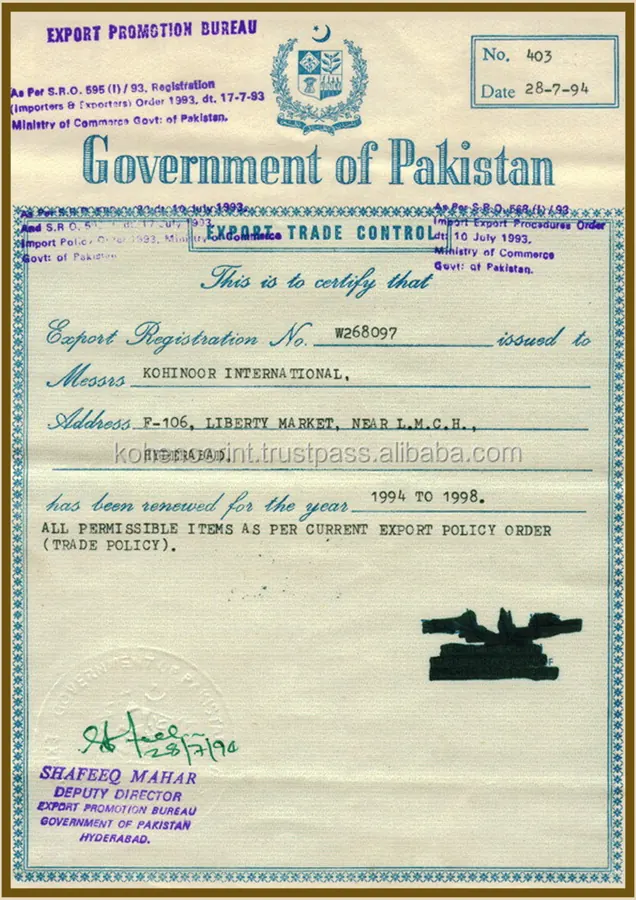
Requirements table
Documents listed are those required at import in addition to the standard Pakistani set (phytosanitary certificate, certificate of origin, ISTA-format report, packing list, invoice, bill of lading). Rules change; confirm with the authority named before shipment.
| Country | Plant-health authority | Documents required at entry | Main ports | Transit from Karachi |
|---|---|---|---|---|
| United Arab Emirates | MOCCAE | Phytosanitary certificate; Certificate of origin; ISTA test report | Jebel Ali, Khalifa Port | 7–10 days sea from Karachi |
| Saudi Arabia | MEWA / SFDA | Phytosanitary certificate; Certificate of origin; SABER registration where applicable | Jeddah, Dammam | 8–12 days sea |
| Oman | MAFWR | Phytosanitary certificate; Certificate of origin | Sohar, Salalah | 5–8 days sea |
| Qatar | MME | Phytosanitary certificate; Certificate of origin | Hamad Port | 8–11 days sea |
| Kuwait | PAAFR | Phytosanitary certificate; Certificate of origin | Shuwaikh, Shuaiba | 9–12 days sea |
| Iraq | Ministry of Agriculture | Phytosanitary certificate; Certificate of origin; Pre-shipment inspection | Umm Qasr | 10–14 days sea |
| Egypt | CAPQ | Phytosanitary certificate; Certificate of origin; Import permit | Alexandria, Port Said | 12–16 days sea |
| Sudan | Plant Protection Directorate | Phytosanitary certificate; Certificate of origin | Port Sudan | 10–14 days sea |
| Iran | PPO Iran | Phytosanitary certificate; Certificate of origin; Import licence | Bandar Abbas | 3–5 days sea / road via Taftan |
| Türkiye | Ministry of Agriculture and Forestry | Phytosanitary certificate; Certificate of origin; Kontrol Belgesi | Mersin, Istanbul | 14–18 days sea |
| Uzbekistan | Agroinspection | Phytosanitary certificate; Certificate of origin; Import quarantine permit | Tashkent (rail/road via Torkham–Termez) | 12–20 days road/rail |
| Kazakhstan | MoA Kazakhstan | Phytosanitary certificate; Certificate of origin; EAEU import permit | Almaty (rail) | 15–22 days road/rail |
| China | GACC | Phytosanitary certificate; Certificate of origin; GACC registration | Qingdao, Shanghai, Tianjin | 18–24 days sea |
| Japan | MAFF Plant Protection | Phytosanitary certificate; Certificate of origin | Yokohama, Kobe | 22–28 days sea |
| South Korea | APQA | Phytosanitary certificate; Certificate of origin; Import declaration | Busan | 20–25 days sea |
| Kenya | KEPHIS | Phytosanitary certificate; Certificate of origin; Plant import permit | Mombasa | 12–16 days sea |
| Ethiopia | MoA Ethiopia | Phytosanitary certificate; Certificate of origin; Import permit | Djibouti | 10–14 days sea |
| Germany | BVL / EU | Phytosanitary certificate; Certificate of origin; EU TRACES CHED-PP | Hamburg | 22–26 days sea |
| United Kingdom | APHA / DEFRA | Phytosanitary certificate; Certificate of origin; IPAFFS pre-notification | Felixstowe, Southampton | 22–26 days sea |
| Australia | DAFF Biosecurity | Phytosanitary certificate; Certificate of origin; BICON import permit | Melbourne, Fremantle | 20–28 days sea |
Additional declarations commonly requested
An additional declaration is a sentence on the phytosanitary certificate confirming a specific freedom or treatment. It must be requested before DPP inspection. The most common ones for seed from Pakistan:
| Declaration | Requested by | Applies to |
|---|---|---|
| Free from Cuscuta spp. (dodder) seed on laboratory examination | Gulf states, Türkiye, EAEU, Egypt, Iran, Australia, China | Alfalfa, clovers, sesbania |
| Free from Sorghum halepense (Johnson grass) | Australia, EAEU, USA | Sorghum, sudan grass |
| Free from Trogoderma granarium (khapra beetle); consignment fumigated | USA, Australia, Kenya, South Africa, EAEU | Cereals, guar, sesame, spices |
| Free from Orobanche spp. (broomrape) | Türkiye, Egypt, EAEU | Clovers, alfalfa |
| Seed treated with phosphine (dose, duration, date) | Most African and Gulf ports on request | All seed for sowing |
| Produced in an area free from Peronospora / Phytophthora (species named) | Australia, EU, Japan | Sesame, clovers |
| Not genetically modified | EU, Türkiye, Kenya, Russia | Sorghum, alfalfa |
Notes by region
- Gulf (UAE, Saudi Arabia, Oman, Qatar, Kuwait, Bahrain): phytosanitary certificate with dodder declaration; Saudi Arabia may require SABER product registration for packaged goods and SFDA registration for food-grade sesame and spices. Certificates of origin must be attested by the chamber.
- Iraq, Iran, Jordan, Egypt: import licence or permit issued to the importer before shipment; Iraq requires pre-shipment inspection by an appointed agency; Egypt's CAPQ issues an import permit naming the species and origin.
- Türkiye: the importer obtains a Kontrol Belgesi (control document) from the Ministry of Agriculture and Forestry before the goods arrive; the phytosanitary certificate must match its wording exactly.
- EAEU (Kazakhstan, Russia, Armenia) and Uzbekistan: import quarantine permit from the national plant quarantine service; the phytosanitary certificate must cite quarantine objects absent (dodder, Johnson grass, khapra beetle).
- China: GACC registration of the exporter and of the seed variety; a quarantine import permit for each shipment; sesame and spices under food-import rules.
- Japan, Korea, Taiwan: plant quarantine inspection at the port; Korea requires an import declaration through APQA; sprouting seed carries a microbial COA (see the sprouting standards guide).
- East Africa (Kenya, Ethiopia, Uganda, Tanzania): plant import permit issued to the importer by KEPHIS, MoA Ethiopia, MAAIF or TPHPA before shipment; the permit number appears on the phytosanitary certificate.
- EU and UK: EU consignments are pre-notified through TRACES as a CHED-PP by the importer; the UK uses IPAFFS. Seed for sowing of listed species must meet EU marketing directives (66/401/EEC for fodder plants) or enter under an equivalence or trial derogation; food-grade seed follows food-import rules.
- Australia: BICON import conditions by species; dodder and Johnson grass nil tolerance; on-arrival inspection of every consignment; fumigation or heat treatment may be required for some seeds.
- Americas (USA, Argentina, Brazil, Mexico): USDA APHIS permit where required; SENASA, MAPA and SENASICA import authorisation for guar and sorghum; Federal Seed Act labelling in the USA.
Standard Pakistani document set
Every shipment: phytosanitary certificate (DPP Pakistan, after inspection at the plant or port), certificate of origin (chamber of commerce, legalised on request), ISTA-format purity and germination report from the in-house laboratory, packing list, commercial invoice, bill of lading. On request: fumigation certificate, certificate of analysis (spices, oilseeds), MSDS, non-GMO declaration, weight and quality inspection by SGS or Bureau Veritas. The report guide explains the test report; the HS code table gives the tariff headings for each product.
Frequently asked questions
What phytosanitary certificate comes with seed from Pakistan?
A certificate issued by the Department of Plant Protection, Government of Pakistan, in the IPPC model format, after inspection of the consignment. It names the botanical species, quantity, marks, importer and any additional declarations requested by the destination.
Which countries require an import permit before shipment?
Egypt, Iraq, Iran, Türkiye (Kontrol Belgesi), Uzbekistan, Kazakhstan, China, Vietnam, Thailand, Malaysia, Indonesia, the Philippines, Bangladesh, Sri Lanka, Kenya, Ethiopia, Uganda, Tanzania, South Africa, Nigeria, Morocco, Tunisia, Algeria, Argentina, Brazil, Mexico and Australia all require some form of importer-side permit or authorisation. The Gulf states, Jordan, Sudan, Afghanistan and Japan generally do not.
What is an additional declaration?
A sentence on the phytosanitary certificate confirming freedom from a named pest or that a treatment was applied, worded to the importing country's requirement. It must be requested before inspection because the inspector verifies it.
Do I need TRACES for seed into the EU?
Yes. The EU importer pre-notifies the consignment as a CHED-PP in TRACES NT before arrival, attaching the phytosanitary certificate. The UK equivalent is IPAFFS.
How long is a phytosanitary certificate valid?
It must be issued within 14 days before dispatch under most countries' rules, and the consignment must not be repacked or mixed after issue. Transit time itself does not invalidate it.
Get today's FOB rate
Tell us the product, quantity and destination port. The export desk replies within 24 hours with price, MOQ, documents and transit time.
export@kohenoorint.com · +92 310 4929292 · Reply within 24 hours