 World Seed
Microbial standards for sprouting seed
Seed for sprouting is a food, not a planting input, and is regulated as one. In the EU, sprout producers must use seed from approved establishments and test each lot for Salmonella and Shiga-toxin-producing E. coli (STEC) before sprouting; Japan and the United States apply similar controls under their own rules. This guide sets out the limits, the regulations behind them and how Pakistani food-grade alfalfa and fenugreek seed is produced and tested to meet them.
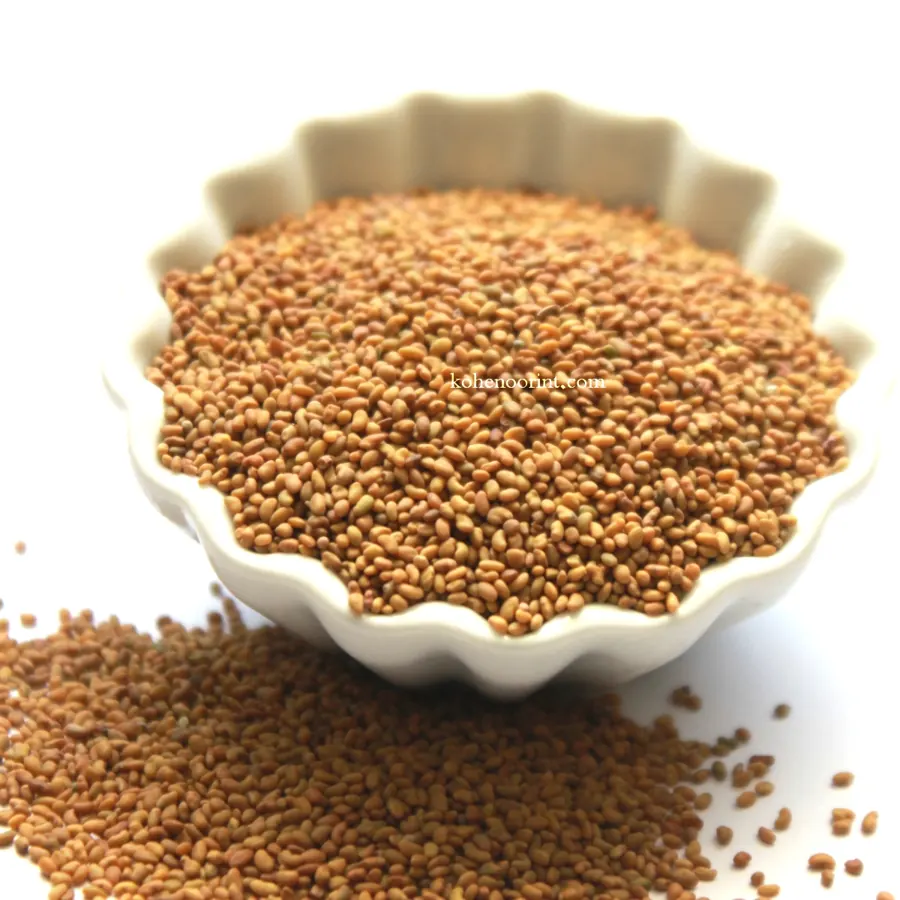
Why sprouting seed is regulated
Sprouting takes place at 20–30 °C and near 100 % humidity for three to seven days, conditions under which a few bacterial cells on a seed can multiply to millions in the finished sprout. Because the sprout is eaten raw, there is no kill step. The 2011 outbreak in Germany and France, traced to fenugreek seed contaminated with STEC O104:H4, caused more than 50 deaths and led to the EU's 2013 sprout regulations. Contamination generally comes from the field (animal manure, irrigation water, wildlife) or from storage, so control starts on the farm, not in the laboratory.
Limits by jurisdiction
The table summarises the limits that apply to seed for sprouting or to the sprouts made from it. Testing is on the seed (before sprouting) or on spent irrigation water and sprouts (during and after sprouting); most producers test both.
| Jurisdiction | Regulation | Salmonella | STEC E. coli | Generic E. coli | Listeria monocytogenes | Other |
|---|---|---|---|---|---|---|
| European Union | Reg. (EC) 2073/2005 as amended by Reg. (EU) 209/2013; Reg. (EU) 208/2013 traceability; Reg. (EU) 210/2013 approval | Absent in 25 g (sprouts, n=5) | O157, O26, O111, O103, O145, O104:H4 absent in 25 g | Not set on seed; process hygiene | 100 cfu/g in sprouts placed on market | Seed lot preliminary test before sprouting; seed from approved establishment |
| United Kingdom | Retained EU 2073/2005 and 208–211/2013 | Absent in 25 g | As EU | — | 100 cfu/g | Same as EU; IPAFFS pre-notification |
| Japan | MHLW hygiene guidance for sprout production (2014); Food Sanitation Act | Absent in 25 g | O157 and other STEC absent | Negative | — | Seed disinfection step required |
| United States | FDA Produce Safety Rule (21 CFR 112 Subpart M); FDA 1999 guidance | Absent in 25 g (spent irrigation water) | Absent | — | Absent in 25 g (environment) | Seed treatment (e.g. 20,000 ppm calcium hypochlorite) and spent irrigation water testing |
| Australia / New Zealand | FSANZ Standard 4.2.6 (Australia) | Absent in 25 g | Absent | — | — | Seed supplier approval |
How the seed lot is tested
For the EU preliminary test, a representative sample of the seed lot (the regulation refers to the sample used for germination testing, at least 0.5 % of the lot by weight or a defined number of sub-samples) is sprouted under the producer's normal conditions and the spent irrigation water or sprouts are tested at 48 hours for Salmonella and the six STEC serogroups by ISO 6579 and ISO/TS 13136. Seed itself can be tested directly by enrichment, but sprouting first raises sensitivity. Results are reported as detected or not detected in 25 g. A positive result condemns the lot. Kohenoor's food-grade lots are tested by an accredited third-party laboratory in Pakistan or at destination, and the certificate of analysis travels with the shipment alongside the ISTA-format germination report described in the report guide.
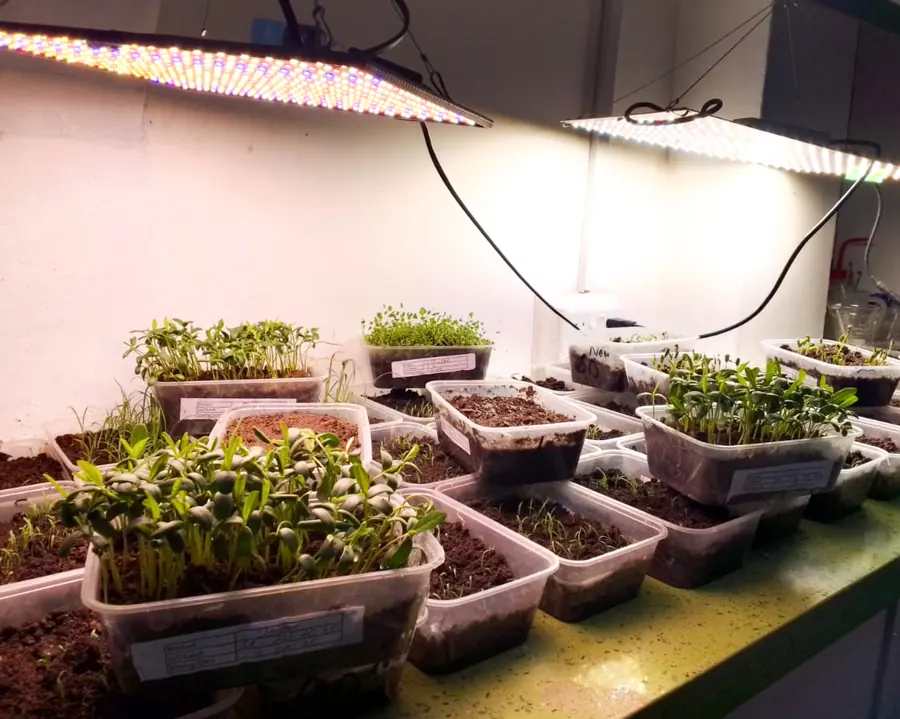
Growing seed for sprouting
- Fields under contract for sprouting seed receive no animal manure or sewage sludge for the crop and the preceding season; only mineral fertiliser.
- Irrigation is from canal or tube-well water tested for E. coli; no surface water from settlements.
- Harvest is mechanised or onto tarpaulins, never on bare ground; grain contact with livestock is excluded.
- Cleaning lines are dedicated or cleaned down between food-grade and forage-grade lots; seed is optically sorted to 99.5 % purity.
- Storage is in lined bags in a rodent-proof store; each lot is traceable to field, harvest date and cleaning batch as required by Reg. (EU) 208/2013.
- Germination is tested at 90 % minimum because sprout producers need uniform, vigorous germination in 3–5 days.
Which crops are involved
Alfalfa is the largest sprouting seed by volume, followed by fenugreek, mung bean, radish, broccoli, clover and cress. From the Pakistani range, food-grade alfalfa KN92 (sold as sprouting alfalfa at 99.5/90) and fenugreek are the two supplied under this regime, to Taiwan, Korea, Japan, Germany, France, the Netherlands, the UK, Poland and Australia. Basil seed is eaten as a whole seed rather than sprouted but carries a similar microbial certificate. The phytosanitary table lists the additional import documents for each of those countries.
Frequently asked questions
What microbial tests are required for sprouting seed in the EU?
Before sprouting, each seed lot must be tested for Salmonella and six STEC serogroups (O157, O26, O111, O103, O145, O104:H4) with the result 'not detected in 25 g'. Finished sprouts must meet Listeria monocytogenes 100 cfu/g. The seed must come from an approved establishment with full traceability.
Is a phytosanitary certificate enough for sprouting seed?
No. The phytosanitary certificate covers plant health. Sprouting seed also needs a microbiological certificate of analysis and, for the EU, the seed supplier's traceability documentation under Regulation 208/2013 and the EU TRACES CHED-PP pre-notification.
Why was fenugreek involved in the 2011 outbreak?
A lot of fenugreek seed contaminated with STEC O104:H4 was sprouted by producers in Germany and France. The outbreak showed that seed can carry pathogens invisibly and led to the EU's lot-testing and approval regulations.
What germination does sprouting seed need?
90 % or higher, with fast, uniform emergence. Sprout producers harvest at 3–5 days, so slow or uneven seed reduces yield and increases the time bacteria have to multiply.
Does seed treatment replace testing?
No. Treatments such as calcium hypochlorite soaks (US practice) reduce surface contamination but do not reach bacteria inside cracked seed. Regulators require both a treatment or hygiene step and lot testing.
Get today's FOB rate
Tell us the product, quantity and destination port. The export desk replies within 24 hours with price, MOQ, documents and transit time.
export@kohenoorint.com · +92 310 4929292 · Reply within 24 hours