 World Seed
Sorghum or pearl millet for summer fodder
Forage sorghum yields more per cut on good soil with reliable water; pearl millet gives more cuts on sand, tolerates more heat and carries no prussic acid. Sudan grass sits between them as the best hay type. The choice depends on soil texture, how the fodder will be fed and whether frost or drought stress is likely during grazing. This guide sets the figures side by side.
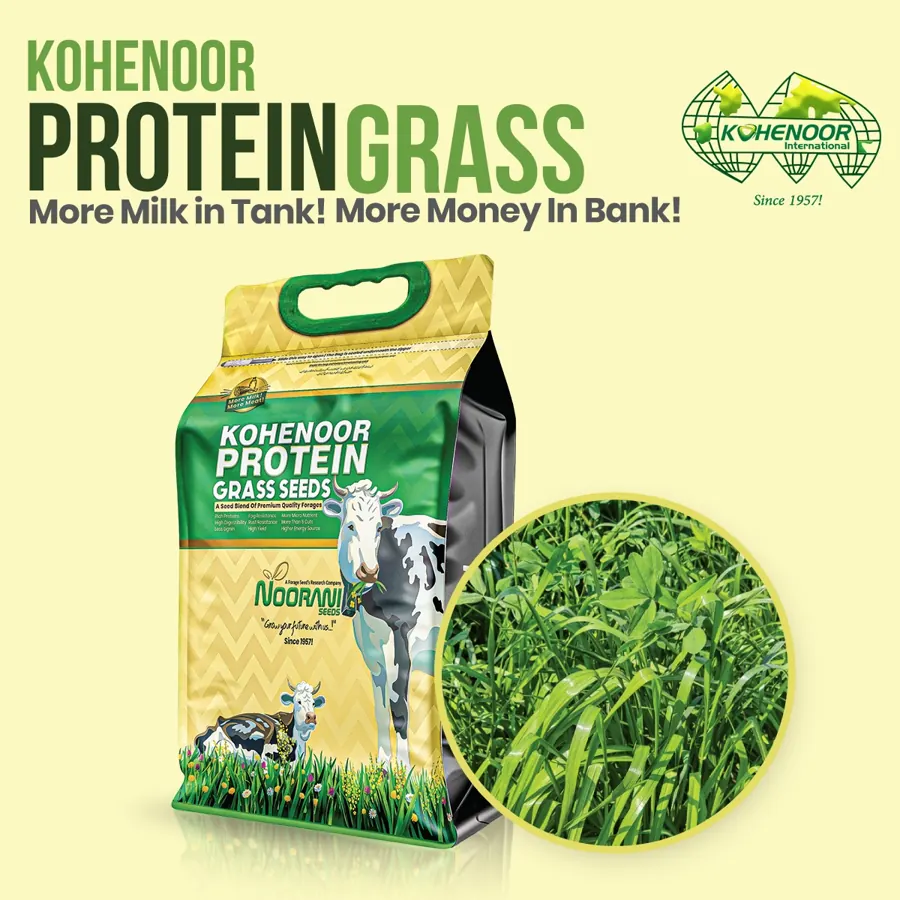
Comparison table
Typical ranges under irrigation, drawn from the profiles for BMR 313, sudan grass and Baymisaal pearl millet.
| Criterion | BMR 313 forage sorghum | Sudan grass | Baymisaal pearl millet |
|---|---|---|---|
| Sowing rate | 20–25 kg/ha | 20–30 kg/ha | 8–10 kg/ha drilled |
| Minimum soil temperature | 16 °C | 15 °C | 20 °C |
| First cut | 55–65 days | 45–55 days | 45–55 days |
| Cuts per season | 3–4 | 4–5 | 3–4 |
| Green yield per season | 80–120 t/ha | 60–90 t/ha | 70–100 t/ha |
| Dry matter per season | 15–25 t/ha | 12–18 t/ha | 15–20 t/ha |
| Crude protein | 8–12 % (12–14 % young) | 10–14 % | 9–12 % (12–14 % young) |
| Fibre digestibility | High (BMR trait) | Medium | Medium |
| Prussic acid | Yes; manage | Low; manage | None |
| Nitrate risk under stress | Yes | Yes | Yes |
| Hay curing | Slow (thick stem) | Fast | Medium |
| Sandy soil | Fair | Fair | Excellent |
| Heavy soil | Good | Good | Fair |
| Drought tolerance | High | High | Very high |
| Salinity threshold (ECe) | ~6.8 dS/m | ~5–6 dS/m | ~5 dS/m |
| Seed type | F1 hybrid; buy yearly | Open-pollinated | F1 hybrid; buy yearly |
Prussic acid: the deciding factor for grazing
All sorghums, including sudan grass, contain the glucoside dhurrin, which releases hydrocyanic (prussic) acid when the plant is damaged. Concentrations are highest in young shoots under 60 cm, in regrowth after cutting, and in plants stressed by drought or frost. Cattle grazing such material can die within an hour. The management rules (graze above 60–75 cm for sorghum and 45 cm for sudan grass, never after frost, wilt green chop, ensile or cure hay) are well established but require discipline. Pearl millet contains no dhurrin, so it can be grazed at any height and after any stress without that risk. Where fodder is grazed by smallholders or cut young for goats and sheep, as in much of East and West Africa, this alone usually decides the choice in favour of millet.
Soil and climate
Pearl millet germinates at soil temperatures above 20 °C and grows best between 28 and 38 °C, which is why it is the crop of the Sahel and the Thar. It roots deeply into sand, tolerates short dry spells and recovers quickly with rain, but it does less well on heavy, waterlogged clay. Sorghum germinates from 16 °C, tolerates temporary waterlogging better and yields more on clay and loam with reliable irrigation. On Gulf pivots the split is often by soil: millet on the sandiest fields, BMR sorghum on the better ones. In Central Asia and Türkiye, where spring soils are cool, sorghum and sudan grass are sown a fortnight before millet would be safe.
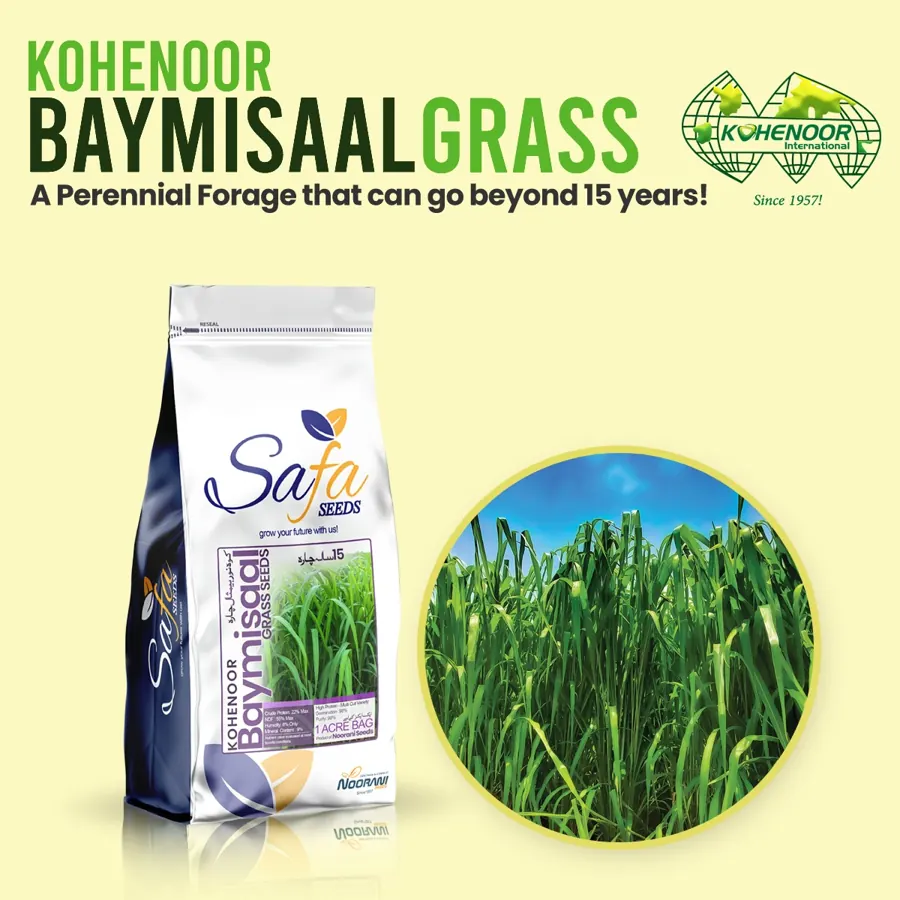
Feeding value
BMR sorghum has the edge in silage: its low-lignin fibre digests 5–10 points better than conventional sorghum or millet, which translates into more intake and more milk per tonne. For hay, sudan grass cures fastest and is eaten most cleanly. Pearl millet green chop has similar protein to sorghum and slightly higher digestibility than conventional sorghum but lower than BMR. All three respond to 40–60 kg N/ha after each cut. A nitrate test on the first cut after a drought-then-rain sequence is prudent for all of them.
Which to sow
| Situation | Sow | Reason |
|---|---|---|
| Dairy silage, good soil, reliable water | BMR 313 | Highest digestible tonnage |
| Sandy soil, very hot, water uncertain | Baymisaal pearl millet | Sand and heat tolerance, no prussic acid |
| Grazing by smallholders, goats, sheep | Pearl millet | No prussic acid at any stage |
| Hay for sale | Sudan grass | Fast curing, thin stem |
| Cool spring sowing (Central Asia, Türkiye) | Sudan grass or BMR 313 | Germinates from 15–16 °C |
| Mixed cut-and-carry, 4+ cuts | Sudan grass or pearl millet | Fastest regrowth |
| Single-cut high-energy silage | Sweet sorghum | Stalk sugar 14–20 °Brix |
Frequently asked questions
Does pearl millet have prussic acid?
No. Pearl millet does not produce dhurrin, so it can be grazed or cut at any stage and after drought or frost without prussic acid risk. Sorghum and sudan grass both do and must be managed.
Which yields more, sorghum or pearl millet?
On good soil with reliable irrigation BMR forage sorghum yields 10–30 % more dry matter per season. On sand, under heat stress or with uncertain water, pearl millet often yields more because it keeps growing where sorghum pauses.
Can I sow both on the same farm?
Yes, and many Gulf and East African farms do: millet on the sandiest blocks and for grazing, BMR sorghum on the better soil for silage, sudan grass for hay. The sowing windows overlap.
Why does sorghum seed need to be bought every year?
BMR 313 and Baymisaal are F1 hybrids; seed saved from them segregates and loses vigour and the BMR trait. Sudan grass and sweet sorghum from Pakistan are open-pollinated and can be saved for a season if isolation is good.
What is the minimum soil temperature for sowing?
About 16 °C for sorghum and sudan grass and 20 °C for pearl millet, measured at 5 cm depth at 8 a.m. Sowing into colder soil gives patchy emergence and weed problems.
Get today's FOB rate
Tell us the product, quantity and destination port. The export desk replies within 24 hours with price, MOQ, documents and transit time.
export@kohenoorint.com · +92 310 4929292 · Reply within 24 hours