 World Seed
Alfalfa, berseem or Rhodes grass: which forage to sow
Alfalfa gives the most protein and the longest stand; berseem gives the most winter forage from a single season; Rhodes grass gives fibre on the saltiest, sandiest land with the least water. Most irrigated dairy systems in the Middle East, North Africa and South Asia use two of the three. This guide compares them on the figures that decide the choice and ends with a decision table by situation.
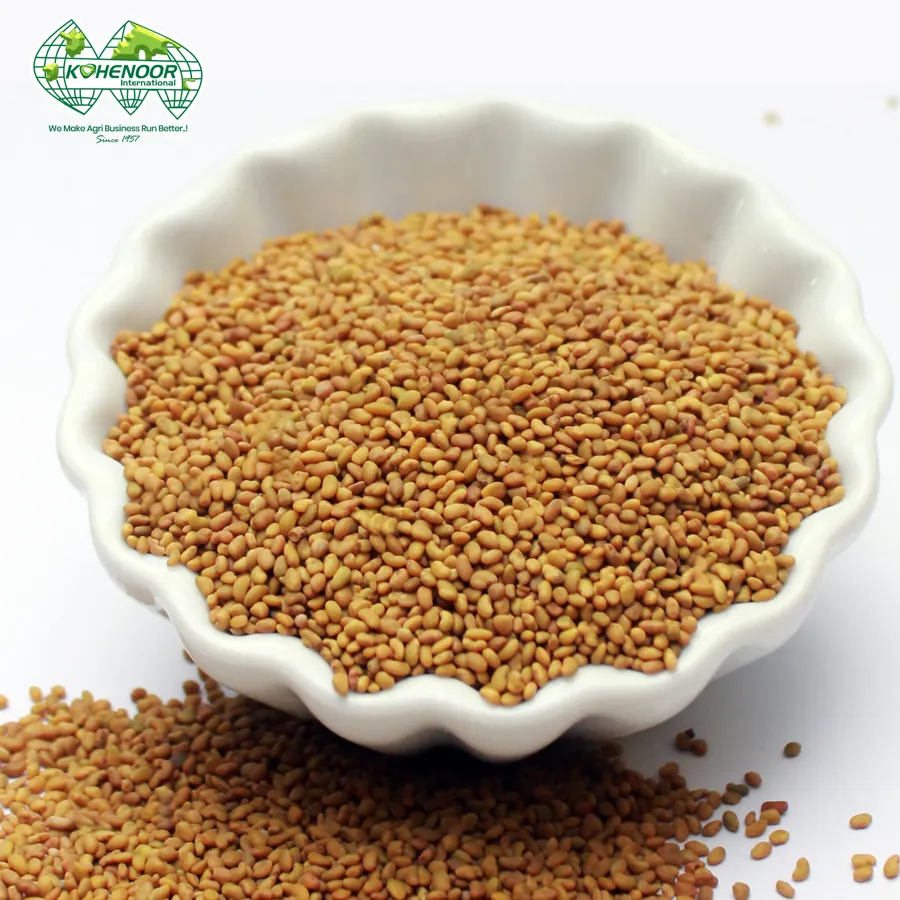
The three crops in one table, with Panicum and Brachiaria
Figures are typical ranges under irrigation and good management, drawn from the variety profiles for alfalfa KN92, berseem and fine cut Rhodes grass. Two humid-tropics grasses, Panicum Mombasa and Brachiaria ruzi, are added for readers in East Africa, South-East Asia and Latin America; the tropical grass guide compares the three grasses in more detail.
| Criterion | Alfalfa (KN92 / Taiztar) | Berseem (Mescavi) | Rhodes grass (fine cut) | Panicum (Mombasa) | Brachiaria (ruzi) |
|---|---|---|---|---|---|
| Plant type | Perennial legume | Annual winter legume | Perennial warm-season grass | Perennial warm-season bunch grass | Perennial warm-season stoloniferous grass |
| Stand life | 3–5 years | One season (Oct–May) | 3–6 years | 3–5 years | 2–4 years (ruzi); 5+ (brizantha) |
| Sowing time | Autumn (Oct–Nov) or spring | Autumn (Oct–Nov) | Spring (Feb–Apr) or autumn | Start of rains or spring (Mar–May) | Start of rains or spring (Mar–May) |
| Sowing rate | 20–25 kg/ha | 25–30 kg/ha | 8–12 kg/ha uncoated | 6–8 kg/ha uncoated | 4–8 kg/ha uncoated |
| Seed standard (purity / germination) | 99 / 85 | 99 / 85 | 98 / 80 | 95 / 70 | 90 / 60 |
| First cut | 60–75 days | 50–60 days | 70–90 days | 60–90 days | 60–90 days |
| Cuts per year | 8–10 (frost-free); 5–7 (cool winter) | 4–6 per season | 6–8 (irrigated) | 5–8 (irrigated); 3–4 rainfed | 4–6 (irrigated); 2–4 rainfed |
| Green yield | 80–120 t/ha/yr | 60–90 t/ha/season | 60–100 t/ha/yr | 80–140 t/ha/yr | 50–90 t/ha/yr |
| Dry matter | 18–25 t/ha/yr | 10–14 t/ha/season | 15–25 t/ha/yr | 20–30 t/ha/yr | 10–20 t/ha/yr |
| Crude protein | 18–22 % | 18–20 % | 9–12 % | 10–14 % | 9–13 % |
| Water per year | 1,200–1,800 mm | 500–800 mm (season) | 700–1,300 mm | 1,000–1,500 mm (rain 800+) | 1,000 mm plus rain |
| Water per t DM | ~70 mm | ~55 mm | ~50 mm | ~50 mm | ~60 mm |
| Salinity threshold (ECe) | ~2 dS/m | ~1.5 dS/m | ~7 dS/m | ~1.5–2 dS/m | ~1.5 dS/m |
| Soil pH | 6.5–8.5 | 6.5–8.5 | 5.5–8.5 | 5.5–8.0 | 4.5–7.5 |
| Heat tolerance | High (Taiztar) / high (KN92) | Low; stops above 35 °C | Very high | High | High |
| Frost tolerance | Moderate (KN92) / low (Taiztar) | Light frost only | Tops killed; regrows | Tops killed; regrows | Killed |
| Waterlogging | Poor | Fair | Fair | Poor | Poor |
| Bloat risk | Yes | Yes | No | No | No |
| Nitrogen need | None (fixes N) | None (fixes N) | 150–300 kg N/ha/yr | 150–300 kg N/ha/yr | 100–200 kg N/ha/yr |
| Seed cost per ha (indicative) | High | Medium | Low–medium | Low–medium | Low–medium |
Where alfalfa wins
Alfalfa is the choice where the stand will be kept for more than one season, where protein is the limiting nutrient in the ration and where irrigation water is adequate and not saline. On a Gulf pivot with 8–10 cuts a year it produces more protein per hectare than any other forage, and as a legume it needs no nitrogen fertiliser. Its weaknesses are sensitivity to waterlogging and salinity, bloat risk on fresh growth and a high seed cost that only pays off over a multi-year stand. In cool-winter climates (Central Asia, Türkiye, northern Iran) the non-dormant Pakistani types give 5–7 cuts and should be sown in spring rather than autumn.
Where berseem wins
Berseem is the choice for a single winter season of high-protein forage in a warm lowland climate, sown after summer cereals or cotton and cleared in May for the next crop. Its yield in the first 120 days exceeds first-year alfalfa, its seed costs less per hectare, and it fits rotations where the land is needed in summer. It does not survive heat or hard frost, needs 10–15 day irrigation intervals and is the most salt-sensitive of the three. In Iraq, Jordan, Egypt and the Indus valley it is the default winter fodder; alfalfa is added where a permanent stand is wanted.
Where Rhodes grass wins
Rhodes grass is the choice for saline soil or water, for very sandy land, for the hottest sites and for hay that must cure quickly. It tolerates an ECe of 7–10 dS/m where alfalfa fails at 2–3, uses about a third less water per tonne of dry matter and carries no bloat risk. Its protein is low, so it is fed with alfalfa or a concentrate rather than instead of them, and it needs nitrogen fertiliser after every cut. Establishment is slower (70–90 days to first cut) and the light seed needs a firm, shallow seedbed. In the Gulf, Sudan and East Africa it is the standard roughage; in South-East Asia it is the pasture grass of choice for cut-and-carry dairy.
Decision table by situation
| Situation | Sow | Why |
|---|---|---|
| Gulf pivot, good water, dairy protein needed | Alfalfa (KN92 + Taiztar blend) | Highest protein, 8–10 cuts, multi-year |
| Gulf pivot, saline water (EC > 4 dS/m) | Rhodes grass | Only one of the three that tolerates it |
| Nile or Indus valley, land needed in summer | Berseem | One-season crop, highest winter yield |
| Reclaimed desert or sodic soil | Rhodes grass (or sesbania first) | Salt and sand tolerance |
| Central Asia, cold winter, permanent stand | Alfalfa KN92, spring sown | Survives −15 °C once established |
| Cut-and-carry dairy in Kenya, Malaysia, Thailand | Rhodes grass + alfalfa in separate blocks | Fibre from grass, protein from legume |
| Heavy, poorly drained soil, cool winter | Persian clover instead of berseem | Tolerates waterlogging and frost |
| Hay for export, fast curing | Rhodes grass fine cut | Thin stems dry in 2–3 days |
| Humid tropics, fertile soil, cut-and-carry or silage | Panicum Mombasa | Highest grass tonnage and 10–14 % protein |
| Acid, infertile or gravelly land, extensive grazing | Brachiaria (ruzi or brizantha) | Grows at pH 4.5; persists under grazing |
Frequently asked questions
Which gives more milk, alfalfa or Rhodes grass?
Alfalfa, by a wide margin per hectare, because of its 18–22 % protein against 9–12 % for Rhodes grass. Most Gulf dairies feed both: alfalfa for protein and Rhodes grass for effective fibre and rumen health.
Can berseem replace alfalfa?
For one winter season in a warm lowland climate, yes, and it will outyield first-year alfalfa. It cannot replace alfalfa as a multi-year stand or as a summer forage, and it is more sensitive to salt.
Which uses the least water?
Per tonne of dry matter, Rhodes grass (about 50 mm) then berseem (about 55 mm, winter only) then alfalfa (about 70 mm). Per hectare per year, berseem uses least because it grows only in the cool season.
Which tolerates salinity?
Rhodes grass holds full yield to about ECe 7 dS/m and useful yield to 10–12. Alfalfa starts losing yield above 2 dS/m and berseem above 1.5 dS/m. On saline land Rhodes grass is the only practical choice of the three.
Can they be grown in a mixture?
Alfalfa and Rhodes grass are sometimes sown together on Gulf pivots but the grass usually dominates within two years under frequent cutting. Separate blocks managed for each crop give better results. Berseem is commonly mixed with annual ryegrass instead.
Get today's FOB rate
Tell us the product, quantity and destination port. The export desk replies within 24 hours with price, MOQ, documents and transit time.
export@kohenoorint.com · +92 310 4929292 · Reply within 24 hours