 World Seed
Panicum, Brachiaria or Rhodes grass: which tropical grass to sow
Rhodes grass is the grass for salt, sand and hay; Panicum (guinea grass, Mombasa type) is the grass for tonnage and protein on fertile, well-drained land with 800 mm plus of rain; Brachiaria is the grass for acid, infertile soil and hard grazing. The three overlap across East Africa, South-East Asia and the humid Americas, and the choice between them is usually decided by soil pH, salinity, rainfall and whether the feed will be cut or grazed. This guide puts their establishment, seed norms, climate limits and feeding value side by side and ends with a decision table.
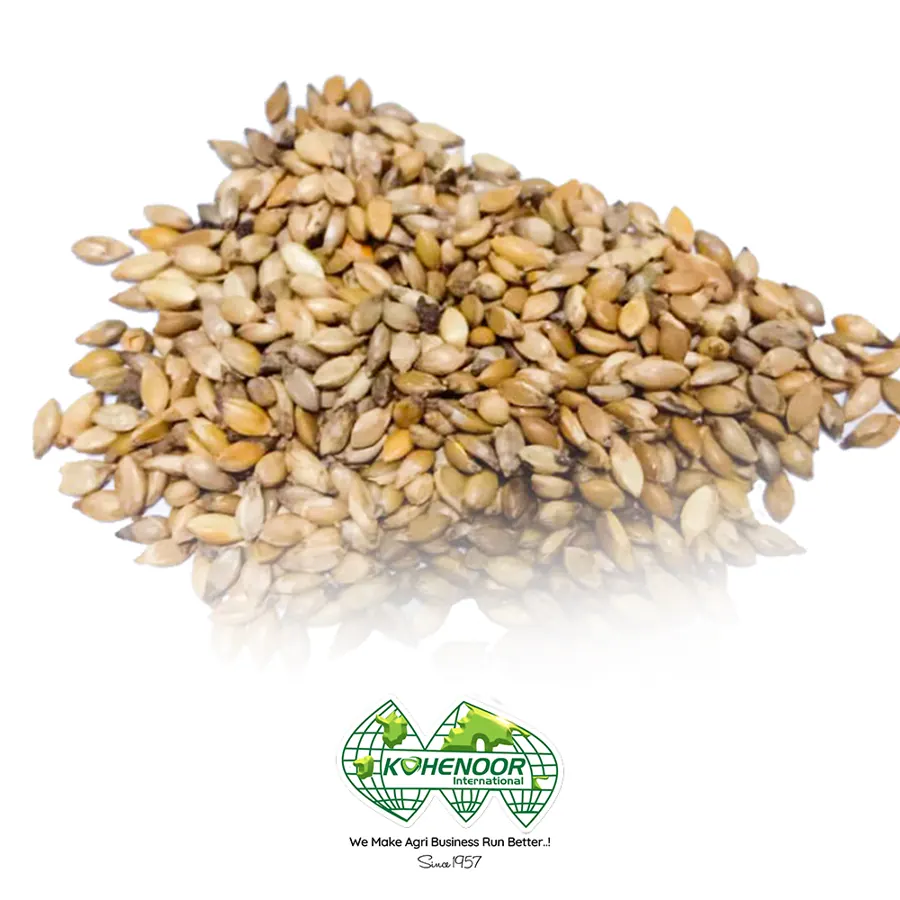
Comparison table
Typical ranges under good management, drawn from the profiles for Panicum Mombasa, Brachiaria ruzi and brizantha and fine cut Rhodes grass. Seed standards are those on the export test report; all three are spikelet seeds where ISTA counts a spikelet with a caryopsis as pure seed.
| Criterion | Panicum (Mombasa / Tanzania) | Brachiaria (ruzi / brizantha) | Rhodes grass (fine cut) |
|---|---|---|---|
| Growth habit | Tall tufted bunch grass, 2–3 m | Decumbent to semi-erect, stoloniferous (ruzi) or tussock (brizantha), 0.6–1.5 m | Stoloniferous, 1–1.5 m; closes a sward fast |
| Establishment | Slow to moderate; needs a fine, firm seedbed and fertility; 60–90 days to first cut | Fast (ruzi, 60–90 days); moderate (brizantha, 90–120 days); tolerates rough seedbeds | Moderate; 70–90 days; roots at nodes and fills gaps |
| Sowing rate (uncoated) | 6–8 kg/ha; 3–5 kg PLS/ha | 4–8 kg/ha; 2–4 kg PLS/ha | 8–12 kg/ha; 6–8 kg PLS/ha |
| Sowing rate (coated) | 10–14 kg/ha | 8–12 kg/ha | 15–20 kg/ha |
| Seeds per kg (uncoated) | 1.0–1.3 million | 200,000–250,000 (ruzi); 130,000–180,000 (brizantha) | 3.5–4.5 million |
| Purity / germination norm | 95 % / 70 % | 90 % / 60 % | 98 % / 80 % |
| Seed dormancy after harvest | About 6 months; tetrazolium on fresh lots | 6–9 months; tetrazolium on fresh lots; acid scarification optional | 3–6 months; germination rises in storage |
| Sowing depth | 0.5–1.5 cm | 1–2 cm | 0.5–1 cm |
| Rainfall (rainfed) | 800–1,800 mm | 1,000 mm plus (ruzi); 800 mm plus (brizantha) | 600 mm plus; best 700–1,200 |
| Irrigation need if irrigated | 1,000–1,500 mm/yr | 1,000–1,400 mm/yr | 700–1,300 mm/yr |
| Soil pH | 5.5–8.0 | 4.5–7.5 | 5.5–8.5 |
| Acid soil / aluminium | Poor below pH 5.0 | Excellent; tolerates 50–70 % Al saturation | Fair |
| Salinity threshold (ECe) | ~1.5–2 dS/m | ~1.5 dS/m | ~7 dS/m (useful to 10–12) |
| Waterlogging | Poor | Poor (ruzi, brizantha) | Fair; tolerates short flooding |
| Drought | Moderate; dormant in dry season | Moderate (ruzi); good (brizantha, deep roots) | Good; stolons survive |
| Frost | Tops killed; crown regrows | Killed | Tops killed; regrows |
| Cuts or grazings per year | 5–8 irrigated; 3–4 rainfed | 4–6 irrigated; 2–4 rainfed | 6–8 irrigated; 4–5 rainfed |
| Dry matter yield | 20–30 t/ha/yr; 10–15 rainfed | 10–20 t/ha/yr; 6–10 rainfed | 15–25 t/ha/yr; 8–12 rainfed |
| Crude protein (4–5 weeks) | 10–14 % | 9–13 % (ruzi); 7–11 % (brizantha) | 9–12 % |
| Digestibility | High when cut young; drops fast after 6 weeks | Highest of the three (ruzi) | Medium |
| Hay curing | Slow (thick stems) | Medium | Fast (2–3 days) |
| Grazing tolerance | Moderate; needs 15–20 cm residual | High (brizantha); moderate (ruzi) | High |
| Pests | Few; some smut | Spittlebug (ruzi susceptible; brizantha resistant) | Few |
| Best use | Cut-and-carry, silage, rotational grazing on fertile soil | Extensive grazing, acid soils, cover crop, erosion control | Hay, saline and sandy land, dairy roughage |
Establishment and seed: what the norms mean
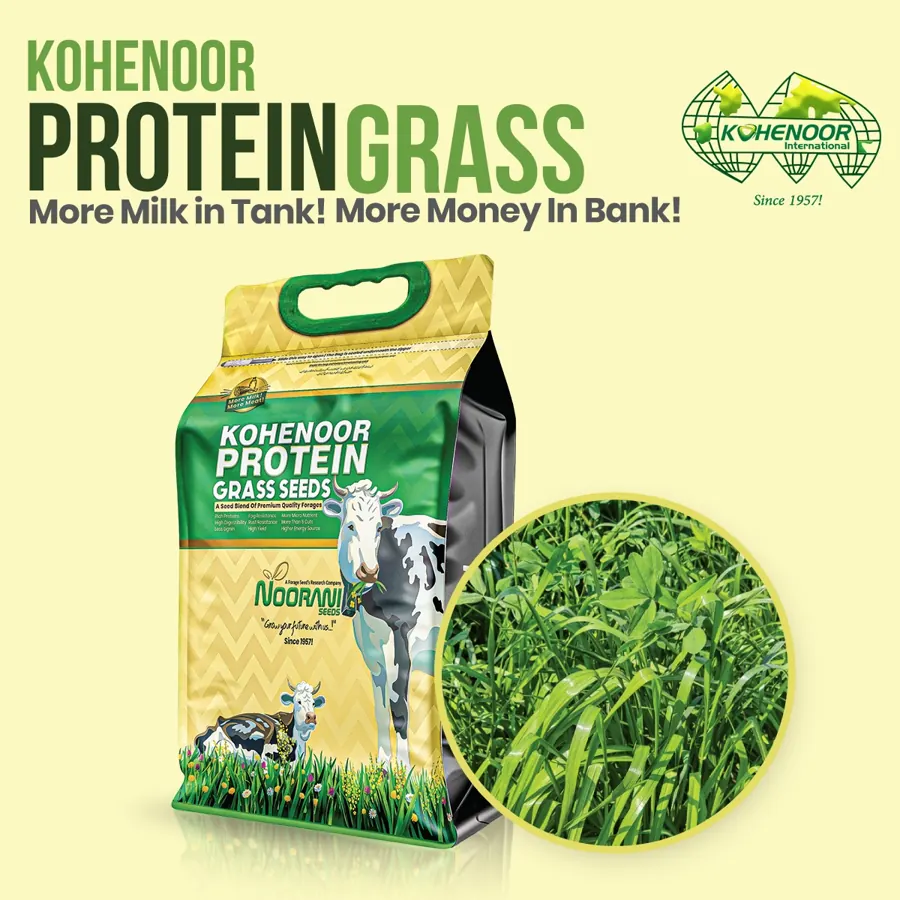
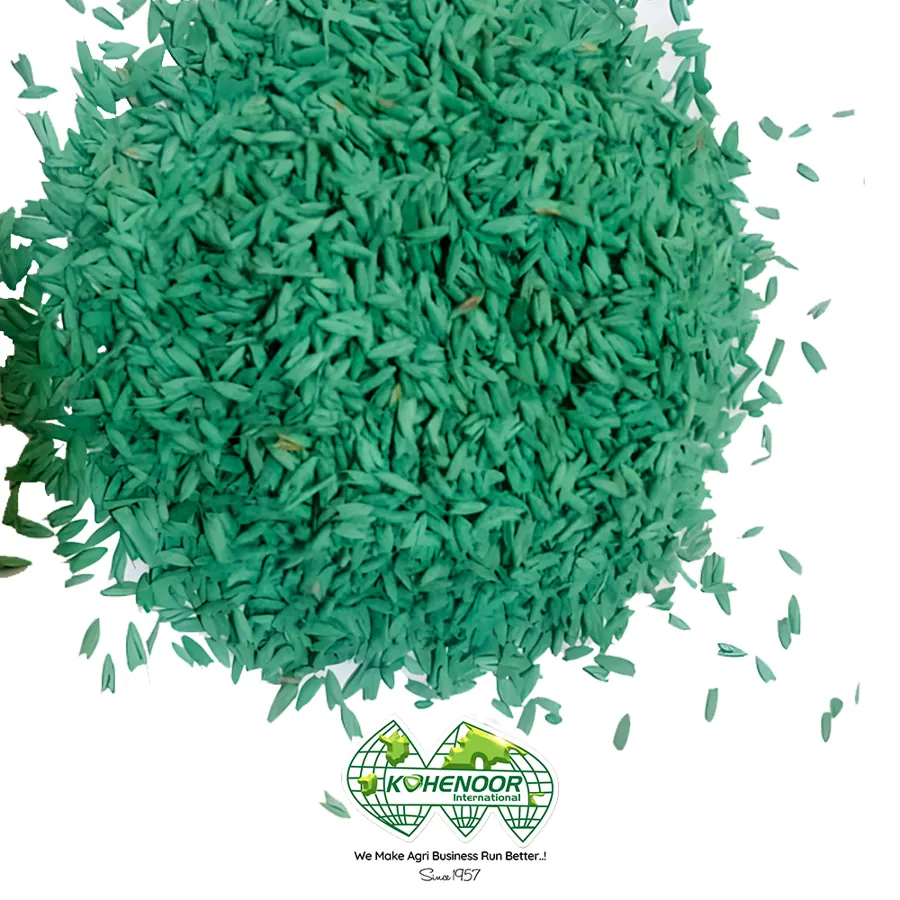
All three are sown from light spikelet seed that must be placed within 1–2 cm of the surface on a fine, firm seedbed and pressed, not buried. The differences are in purity, dormancy and count. Rhodes grass seed is the lightest (3.5–4.5 million per kg) and cleans to 98 %; Panicum (1.0–1.3 million per kg) to 95 %; Brachiaria (130,000–250,000 per kg) only to 90 % because of empty florets and chaff. Fresh Panicum and Brachiaria seed is dormant for six to nine months, so their germination norms of 70 % and 60 % apply after dormancy has broken and fresh lots are traded on a tetrazolium viability result. Buy and sow on pure live seed: the standards guide shows the calculation and the sowing rate tables convert to per-acre rates. Coated seed of all three is available for air-seeders and pivots; the coat is 40–50 % of bag weight.
Soil and water: the deciding limits
Salinity and pH decide most cases before yield is considered. Rhodes grass is the only one of the three that tolerates saline soil or water (full yield to ECe 7 dS/m), which is why it dominates Gulf pivots and reclaimed land in Sudan and Egypt; Panicum and Brachiaria fail above about 2 dS/m. Brachiaria is the only one that grows on strongly acid, aluminium-rich soils (pH 4.5, Al saturation 50–70 %), which is why it covers the Cerrado, the Llanos and the acid uplands of South-East Asia; Panicum needs pH 5.5 or more and fertility, and Rhodes grass sits between. On rainfall, Rhodes grass persists from 600 mm, Panicum needs 800 mm and Brachiaria ruzi 1,000 mm, although brizantha types manage on 800 mm with a dry season. None of the three tolerates waterlogging well; Rhodes grass survives short flooding best.
Feeding value and management
Panicum Mombasa gives the most dry matter and, cut at four to five weeks, the most protein of the three, but its quality falls fastest if cutting is delayed and its thick stems cure slowly, so it is a cut-and-carry and silage grass rather than a hay grass. Brachiaria ruzi has the highest digestibility and is the most palatable, and brizantha types stand up to continuous heavy grazing and spittlebug; both are grazing grasses first. Rhodes grass is the hay grass: thin stems, fast curing, low bloat risk and a dense sward that carries machinery. All three need nitrogen after each cut or grazing (40–60 kg N/ha) to hold protein above 10 %, and all three pair with a legume block of alfalfa or, in the humid tropics, a tree legume for protein.
When to choose which
| Situation | Sow | Why |
|---|---|---|
| Saline or sodic soil, brackish water, Gulf pivot | Rhodes grass | Only one of the three tolerating ECe above 2 dS/m |
| Sandy soil, hay for sale or export | Rhodes grass fine cut | Fast curing, dense sward, tolerates sand |
| Fertile, well-drained soil, 800 mm plus, cut-and-carry dairy | Panicum Mombasa | 20–30 t DM/ha and 10–14 % protein |
| Silage from a grass, irrigated block | Panicum Mombasa | Highest tonnage per cut |
| Acid, infertile or gravelly soil (pH below 5.5) | Brachiaria (brizantha for dry season, ruzi for wet) | Grows at pH 4.5 and high aluminium |
| Extensive beef grazing, heavy stocking | Brachiaria brizantha | Persistence under grazing; spittlebug resistance |
| Cover crop between rice or maize, short ley | Brachiaria ruzi | Fast establishment, easy to remove |
| Smallholder cut-and-carry, low inputs | Panicum Tanzania or Brachiaria ruzi | Tolerate lower fertility than Mombasa |
| Dry season of 4–5 months, no irrigation | Brachiaria brizantha or Rhodes grass | Deep roots (brizantha); stolon survival (Rhodes) |
| Cool-winter subtropics with frost | Rhodes grass | Crown survives frost; regrows in spring |
Related pages
The alfalfa vs berseem vs Rhodes guide compares these grasses with the legumes; the summer fodder guide covers the annual grasses. The container table shows why light grass seed loads at 10–14 MT per 20-ft, and the export calendar gives the December-to-April window in which Panicum and Brachiaria lots become available with germination results.
Frequently asked questions
Which tropical grass yields the most?
Panicum Mombasa, at 20–30 t/ha of dry matter a year on fertile, well-drained soil with 800 mm plus of rain or irrigation and nitrogen after each cut. Rhodes grass gives 15–25 t/ha and Brachiaria 10–20 t/ha under the same management, but both hold their yield on soils where Panicum fails.
Which grass tolerates acid soil?
Brachiaria. Ruzi and brizantha types grow at pH 4.5 with 50–70 % aluminium saturation, which Panicum and Rhodes grass do not tolerate. Panicum needs pH 5.5 or above and fertility; Rhodes grass grows from 5.5 to 8.5.
Which grass tolerates salinity?
Rhodes grass, with full yield to ECe 7 dS/m and useful yield to 10–12. Panicum and Brachiaria lose yield above about 1.5–2 dS/m and are not sown on saline land or with brackish water.
Why are Panicum and Brachiaria germination norms so low?
Both are spikelet seeds that shed unevenly and carry post-harvest dormancy of six to nine months. The commercial norms of 70 % (Panicum) and 60 % (Brachiaria) apply after dormancy has broken; fresh lots are traded on a tetrazolium viability result and all three grasses are best bought and sown on a pure-live-seed basis.
Can the three be sown together?
Not usefully. Their soil requirements differ and one usually dominates within two years. Sow each on the block that suits it: Rhodes grass on saline or sandy land, Panicum on fertile cut-and-carry blocks, Brachiaria on acid or grazed paddocks, with a legume block for protein.
Get today's FOB rate
Tell us the product, quantity and destination port. The export desk replies within 24 hours with price, MOQ, documents and transit time.
export@kohenoorint.com · +92 310 4929292 · Reply within 24 hours