 World Seed
Brachiaria, Ruzi and Brizantha Types (Urochloa spp.)
Brachiaria is the pasture grass that made cattle production possible on the acid, aluminium-rich soils of the Brazilian Cerrado, and it is now the most widely sown tropical grass in the world. The ruzi type establishes fastest and gives the most palatable, digestible feed; the brizantha type is deeper-rooted, more drought-tolerant and more persistent under heavy grazing. Both are traded at 90 % purity and 60 % germination, are usually sold coated, and are covered here with agronomy, seed standards and regions.
Botanical identity and type
Botanical name: Urochloa ruziziensis (R. Germ. & C.M. Evrard) Crins (syn. Brachiaria ruziziensis) and Urochloa brizantha (Hochst. ex A. Rich.) R.D. Webster, Poaceae.
Origin / type: Central and East African pasture grasses; ruzi (Congo signal) and brizantha (palisade grass) types multiplied in Sindh and sold as Kohenoor Velvet Grass.
Crop type: Perennial warm-season pasture grass for grazing, hay and erosion control on acid and low-fertility soils.
Ruzi grass (U. ruziziensis) is a leafy, decumbent-to-semi-erect grass 0.6–1.5 m tall that roots at the nodes, forms a dense sward within 60–90 days of sowing and is the most digestible of the Brachiarias, with 9–13 % crude protein at four to five weeks. It needs 1,000 mm or more of rain or irrigation, tolerates soils of pH 4.5 and high aluminium saturation, but does not persist through a long dry season and is susceptible to spittlebug. Brizantha types (palisade grass, of which Marandu is the best-known cultivar) are taller, tussock-forming, deeper-rooted and tolerate a 4–5 month dry season, heavier grazing and spittlebug; they need at least 800 mm of rain and good drainage. Neither tolerates waterlogging or salinity and both are killed by frost.
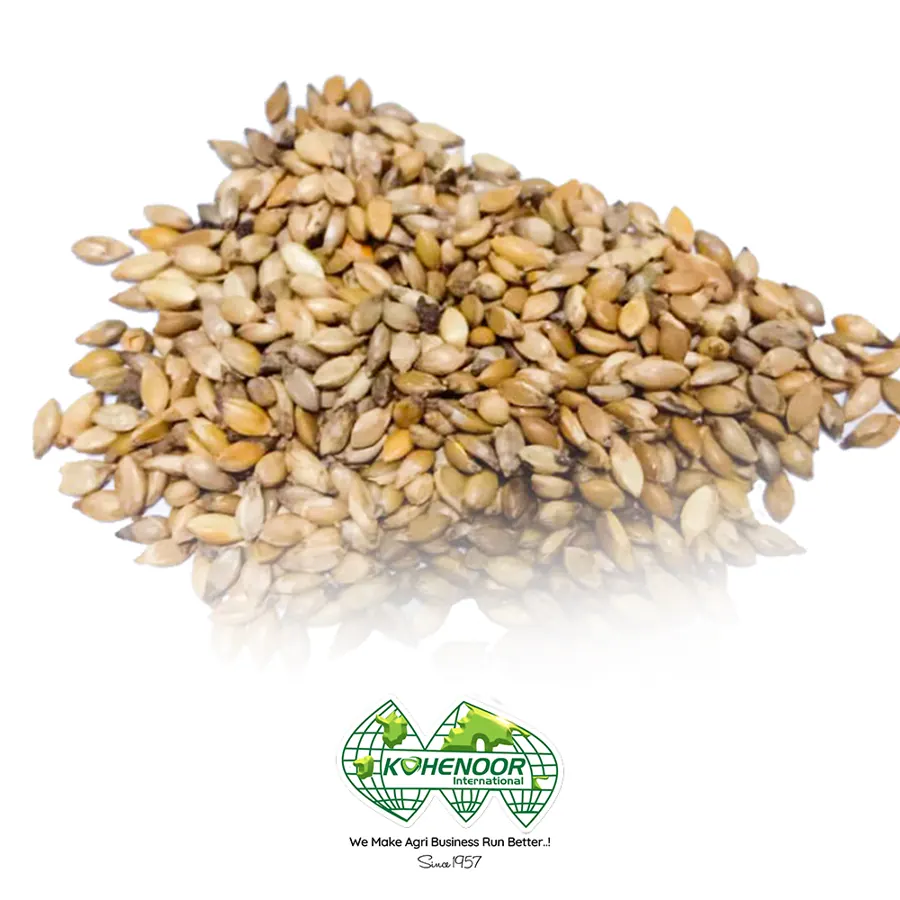
The seed is a plump spikelet, about 200,000–250,000 seeds per kg for ruzi and 130,000–180,000 for brizantha. Seed shed is uneven and fresh seed carries dormancy of six to nine months, which is why the commercial standard is 90 % purity and 60 % germination; a tetrazolium result is reported on fresh lots. Much of the world trade is in coated (pelleted) seed, where a clay or lime coat improves flow through seeders and adds fungicide; coated seed is bought and sown on a pure-live-seed basis. Pakistani lots are supplied uncoated unless coating is ordered.
Brachiaria is the choice over Panicum on acid, infertile or gravelly land and for extensive grazing, and over Rhodes grass in humid climates without salinity. Ruzi is also sown as a short-term cover and forage crop in rice and maize systems in South-East Asia. The tropical grass comparison gives the figures side by side; the sowing rate tables convert the rates below.
Agronomy at a glance
Figures are typical ranges under good management; local trials should confirm rates for a specific site. Use the sowing rate tables to convert kg/ha to per-acre, per-feddan or per-jerib rates.
| Parameter | Typical range |
|---|---|
| Sowing rate | 4–8 kg/ha uncoated (typical); 8–12 kg/ha coated; 2–4 kg PLS/ha |
| Sowing depth | 1–2 cm; rolled; coated seed can go to 2.5 cm |
| Row spacing | Broadcast, or 30–50 cm rows; oversown into maize or rice stubble at 6–8 kg/ha |
| Days to first cut / grazing | 60–90 days (ruzi); 90–120 days (brizantha); then 30–45 days |
| Cuts / grazings per year | 4–6 with irrigation or a long wet season; 2–4 rainfed |
| Yield, green | 50–90 t/ha/year (typical, fertilised) |
| Yield, dry matter | 10–20 t/ha/year; 6–10 t/ha rainfed on poor soils |
| Crude protein | 9–13 % DM ruzi; 7–11 % brizantha at 4–5 weeks |
| Soil pH | 4.5–7.5; tolerates aluminium saturation to 50–70 % |
| Water need | Rainfall 1,000 mm plus (ruzi); 800 mm plus (brizantha); no waterlogging |
| Temperature | Optimum 25–35 °C; growth stops below 15 °C; frost kills |
| Salinity tolerance | Low: threshold ECe ~1.5 dS/m |
| Seeds per kg | 200,000–250,000 (ruzi); 130,000–180,000 (brizantha), uncoated |
Export seed standards
Standards below are those written on the ISTA-format test report issued with each export lot. See how purity and germination standards work and how to read the report.
| Parameter | Export standard | Method / note |
|---|---|---|
| Pure seed (purity) | 90.0 % min (spikelets with caryopsis) | ISTA purity analysis on a 4-component working sample |
| Germination | 60 % min after dormancy break; tetrazolium viability 70 % min on fresh lots | ISTA between-paper or sand test, 4 x 100 seeds, normal seedlings |
| Moisture | 12 % max | ISTA oven method (low-constant temperature, 103 °C, 17 h) |
| Inert matter | 10 % max | Chaff, soil, broken pieces smaller than half seed |
| Other crop seed | 0.5 % max | Seeds of any other cultivated species |
| Weed seed | 0.2 % max | By number and identity on the report |
| Dormancy | 6–9 months post-harvest | Fresh lots carry a tetrazolium result; acid scarification on request |
| Coating | Uncoated (standard); coated on request | Coated lots sold on pure-live-seed basis; fungicide in coat stated on label |
Where it is grown
Seed is multiplied on well-drained, mildly acid to neutral land in Sindh (Mirpurkhas, Sanghar, Tando Allahyar) from March–April sowings, with seed heads swept or direct-headed from September to November. Cleaned seed is held in dry store while dormancy breaks; lots with tetrazolium results ship from December and with germination results from about April. Brazil remains the largest producer of Brachiaria seed worldwide; Pakistan supplies uncoated ruzi and brizantha types at forage-seed prices to Africa and Asia.
Importing markets: Kenya, Ethiopia, Uganda, Tanzania, Nigeria, Chad, South Africa, Malaysia, Indonesia, Thailand, Vietnam, Philippines, Brazil, Mexico, Sri Lanka, Bangladesh. Ruzi is the pasture and cover grass of Thailand, Vietnam, Malaysia, Indonesia and the Philippines and of smallholder dairy in Kenya, Uganda and Tanzania; brizantha types are grown for beef pasture in Brazil, Mexico, Nigeria and Chad and on the acid soils of Sri Lanka and Bangladesh's hill tracts.
Buying notes
Brachiaria Ruzi and Brizantha is exported by Kohenoor International from Karachi and Port Qasim under HS 1209.29. Standard pack is 25 kg; minimum order 1 x 20ft (smaller lots possible). New-crop seed ships from December with a tetrazolium viability result; germination-tested lots from April. Every shipment carries a phytosanitary certificate (Department of Plant Protection, Pakistan), a certificate of origin, an ISTA-format purity and germination report, packing list and invoice; fumigation certificate and COA on request.
Pricing, samples and shipment planning are handled on the specialist product site: kohenoorint.com. For loading weights see the container capacity table; for destination paperwork see phytosanitary requirements by destination.
| Item | Detail |
|---|---|
| HS code | 1209.29 |
| Pack | 25 kg |
| Minimum order | 1 x 20ft (smaller lots possible) |
| Purity / germination on report | 90% min / 60% min |
| Shipping terms | FOB or CIF Karachi / Port Qasim |
| Specialist site | kohenoorint.com |
Frequently asked questions
Why is Brachiaria seed only 90 % pure and 60 % germination?
Brachiaria seed is a spikelet that sheds unevenly, so harvested seed carries empty florets and chaff that cleaning cannot fully remove, and fresh seed is dormant for six to nine months. 90/60 is the international commercial standard; fresh lots are traded on a tetrazolium viability result and sown on pure live seed.
Should I buy coated or uncoated Brachiaria seed?
Coated seed flows better through seeders, carries a fungicide and is easier to spread evenly, but 40–50 % of the bag is coating, so compare on pure live seed per hectare. Uncoated seed is cheaper per unit of live seed and is what Pakistani lots are unless coating is ordered.
Ruzi or brizantha?
Ruzi for the wettest sites (1,000 mm plus), cut-and-carry, short-term leys and highest digestibility; brizantha for a long dry season, heavy grazing, spittlebug areas and long-term pasture. Many farms sow ruzi for the first two years and brizantha for permanent paddocks.
Does Brachiaria tolerate acid soil?
Yes. It is the most acid-tolerant of the commercial tropical grasses, growing at pH 4.5 and aluminium saturation of 50–70 % where Panicum and Rhodes grass fail. It still responds to lime and phosphorus, and nitrogen after each grazing raises protein.
What is the HS code for Brachiaria seed?
HS 1209.29 (other seeds of forage plants for sowing). The phytosanitary certificate names Urochloa ruziziensis or Urochloa brizantha, with the Brachiaria synonym where the importing authority uses it.
Need Brachiaria Ruzi and Brizantha seed?
The knowledge base is maintained by Kohenoor International's agronomy team. Quotes for Brachiaria Ruzi and Brizantha are handled by the export desk and the specialist site linked in the buying notes.
export@kohenoorint.com · +92 310 4929292 · Reply within 24 hours