 World Seed
Cumin (Cuminum cyminum)
Cumin is a dryland winter spice grown in Balochistan and interior Sindh, harvested in March–April and exported machine-cleaned or Sortex-sorted. It is one of the most disease-sensitive spice crops and needs a dry finish. Agronomy, export specification and growing regions are set out below.
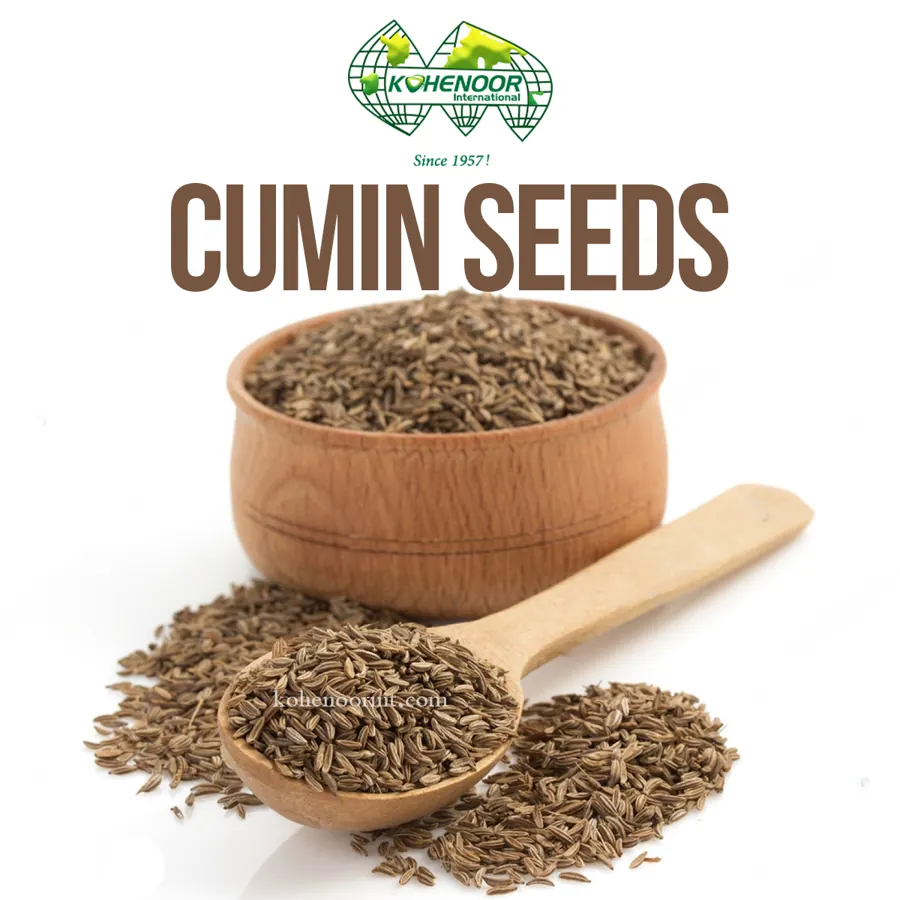
Botanical identity and type
Botanical name: Cuminum cyminum L., Apiaceae.
Origin / type: Dryland winter spice of the Iranian plateau and Balochistan; Pakistani landrace.
Crop type: Annual cool-season spice crop grown for whole seed and volatile oil.
Cumin is a slender 20–40 cm annual of the carrot family with white or pink umbels that form ridged, elongated fruits (the seed of commerce) 4–6 mm long. It is sown in November on light, well-drained soil in regions with a cool, dry winter and matures in 110–130 days. The seed contains 2.5–4.5 % volatile oil in which cuminaldehyde is 25–40 %, plus 17–20 % protein and 15–20 % fixed oil. The crop is prone to Fusarium wilt, Alternaria blight and powdery mildew if humidity rises at flowering, which confines commercial production to arid districts.
Harvest is by hand-cutting at the straw-coloured stage, drying in windrows and threshing. Field-run seed carries 5–10 % stalks, dust and immature seed; export lots are cleaned on air-screen machines, destoners and gravity tables to 99 % purity, and Sortex grade adds optical sorting to 99.5 % with removal of dark seed. Moisture is 9 % maximum. European and US buyers require pesticide-residue and Salmonella tests; ethylene-oxide treatment is not used because it is banned in the EU.
Cumin sits with nigella and fenugreek in the Pakistani spice range. The export calendar shows the March–April harvest; the container table gives loading weights for 25 kg and 50 kg bags.
Agronomy at a glance
Figures are typical ranges under good management; local trials should confirm rates for a specific site. Use the sowing rate tables to convert kg/ha to per-acre, per-feddan or per-jerib rates.
| Parameter | Typical range |
|---|---|
| Sowing rate | 12–15 kg/ha drilled; 15–20 kg/ha broadcast (typical) |
| Sowing depth | 1–1.5 cm |
| Row spacing | 20–30 cm rows or broadcast |
| Days to harvest | 110–130 days |
| Harvests per season | 1 |
| Yield, seed | 0.5–0.9 t/ha (typical) |
| Yield, straw | 1–2 t/ha |
| Volatile oil / protein | 2.5–4.5 % volatile oil; 17–20 % protein |
| Soil pH | 6.8–8.3; sandy loam |
| Water need | 250–350 mm; 3–4 light irrigations; no rain at flowering |
| Temperature | Optimum 10–25 °C in growth; 25–30 °C at ripening |
| Salinity tolerance | Low to moderate: threshold ECe ~3 dS/m |
| Seeds per kg | 250,000–300,000 |
Export seed standards
Standards below are those written on the ISTA-format test report issued with each export lot. See how purity and germination standards work and how to read the report.
| Parameter | Export standard | Method / note |
|---|---|---|
| Purity (sound, clean seed) | 99.0 % min (Sortex 99.5 %) | Machine-cleaned; optical sorted where stated |
| Moisture | 9 % max | Oven or calibrated capacitance meter at dispatch |
| Admixture / foreign matter | 1.0 % max (Sortex 0.5 %) | Stones, stalks, dust, other seed by weight |
| Germination | Not tested — edible/spice grade | Sowing-grade lots are tested on request (ISTA method) |
| Volatile oil | 2.5 % min | Steam distillation on composite sample |
| Total ash / acid-insoluble ash | 9.5 % max / 1.5 % max | ISO 948 method |
| Ethylene oxide | Not used | Steam or phosphine treatment only |
Where it is grown
Cumin is grown in the arid districts of Balochistan (Kalat, Khuzdar, Chagai, Mastung) and in interior Sindh (Dadu, Jamshoro, Khairpur), sown in November and harvested in March–April. Cleaning and sorting are complete by May.
Importing markets: United Arab Emirates, Saudi Arabia, Egypt, United States, United Kingdom, Brazil. The Gulf and Egypt buy whole seed for retail and food service; the United States, UK and Brazil for grinding and blends.
Buying notes
Cumin Seed is exported by Kohenoor International from Karachi and Port Qasim under HS 0909.31. Standard pack is 25 kg / 50 kg; minimum order 1 x 20ft. Harvest March–April; new crop from May. Every shipment carries a phytosanitary certificate (Department of Plant Protection, Pakistan), a certificate of origin, an ISTA-format purity and germination report, packing list and invoice; fumigation certificate and COA on request.
Pricing, samples and shipment planning are handled on the specialist product site: herbnseed.com. For loading weights see the container capacity table; for destination paperwork see phytosanitary requirements by destination.
| Item | Detail |
|---|---|
| HS code | 0909.31 |
| Pack | 25 kg / 50 kg |
| Minimum order | 1 x 20ft |
| Purity / germination on report | 99% min / n/a |
| Shipping terms | FOB or CIF Karachi / Port Qasim |
| Specialist site | herbnseed.com |
Frequently asked questions
What is the difference between machine-clean and Sortex cumin?
Machine-clean is cleaned by air-screen, destoner and gravity table to 99 % purity with up to 1 % admixture. Sortex adds optical colour sorting to reach 99.5 % purity, 0.5 % admixture and removes dark or immature seed. Sortex is the grade for retail packing.
What volatile oil content is typical?
2.5–4.5 % by steam distillation, with cuminaldehyde at 25–40 % of the oil. Oil content declines slowly in storage; ship and store below 9 % moisture and out of sunlight.
Why does cumin need a dry climate?
Fusarium wilt, Alternaria blight and powdery mildew spread rapidly if humidity or rain occurs at flowering, and losses can exceed 50 %. Commercial production is therefore confined to arid winter zones like Balochistan.
Does Pakistani cumin meet EU pesticide and ethylene oxide rules?
Lots for the EU are tested against Regulation 396/2005 MRLs by an accredited laboratory before shipment, and ethylene oxide is never used; steam or phosphine treatment is applied where required.
What is the HS code for cumin seed?
HS 0909.31 (cumin seeds, neither crushed nor ground). Each shipment carries a phytosanitary certificate, certificate of origin, COA and packing list.
Need Cumin Seed seed?
The knowledge base is maintained by Kohenoor International's agronomy team. Quotes for Cumin Seed are handled by the export desk and the specialist site linked in the buying notes.
export@kohenoorint.com · +92 310 4929292 · Reply within 24 hours