 World Seed
Nigella Sativa, Kalonji (Nigella sativa)
Nigella sativa, called kalonji in Pakistan and black cumin or black seed elsewhere, is a small cool-season annual grown for its matte black seed, its cold-pressed oil and the thymoquinone extracted from it. This page gives its agronomy, the machine-clean export specification and where it is grown and sold.
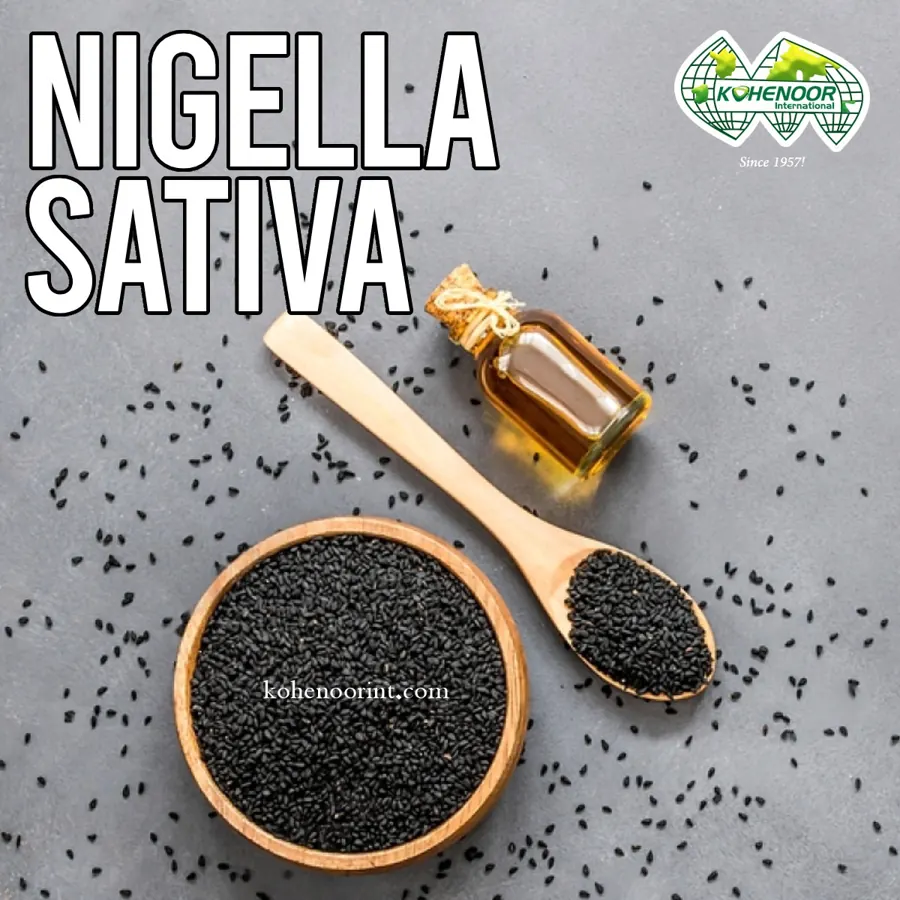
Botanical identity and type
Botanical name: Nigella sativa L., Ranunculaceae.
Origin / type: Cool-season annual of West Asian origin; Pakistani landrace grown in Punjab and Sindh.
Crop type: Annual spice and oilseed grown for whole seed, cold-pressed oil and thymoquinone extracts.
Nigella is a 30–50 cm annual with finely divided leaves and pale blue flowers that form an inflated capsule of five fused follicles. Each capsule holds 60–80 black, angular seeds 2–3 mm long. The seed contains 30–38 % fixed oil (mainly linoleic and oleic acid), 0.4–1.5 % volatile oil in which thymoquinone is 20–40 %, and 20–22 % protein. It is used whole on breads and in pickles across South Asia and the Middle East, cold-pressed for oil in Europe and North America, and extracted for thymoquinone standardised supplements.
The crop is sown in October–November on well-drained loam and harvested in March–April when capsules turn straw-coloured but before they split. Yield is modest, 0.6–1.0 t/ha, and the seed is easily contaminated with soil and weed seed of similar size, so export lots are cleaned on gravity tables and destoners to 99 % purity and 8 % moisture. Nigella seed is not sold for sowing from this range; buyers wanting planting stock request an ISTA germination test on a spice-grade lot.
Nigella shares its season and soils with cumin and fenugreek. Specifications for the oil trade are handled on the herb and seed site; the HS code table lists its heading and the storage guide explains the 8 % moisture limit.
Agronomy at a glance
Figures are typical ranges under good management; local trials should confirm rates for a specific site. Use the sowing rate tables to convert kg/ha to per-acre, per-feddan or per-jerib rates.
| Parameter | Typical range |
|---|---|
| Sowing rate | 8–10 kg/ha drilled; 10–12 kg/ha broadcast (typical) |
| Sowing depth | 1–2 cm |
| Row spacing | 25–30 cm rows |
| Days to harvest | 130–150 days |
| Harvests per season | 1 |
| Yield, seed | 0.6–1.0 t/ha (typical) |
| Yield, straw | 1.5–2.5 t/ha |
| Oil / protein | 30–38 % fixed oil; 0.4–1.5 % volatile oil; 20–22 % protein |
| Soil pH | 6.5–8.0 |
| Water need | 300–400 mm; 3–4 light irrigations; dry weather at maturity |
| Temperature | Optimum 15–28 °C; tolerates light frost |
| Salinity tolerance | Low: threshold ECe ~2 dS/m |
| Seeds per kg | 350,000–450,000 |
Export seed standards
Standards below are those written on the ISTA-format test report issued with each export lot. See how purity and germination standards work and how to read the report.
| Parameter | Export standard | Method / note |
|---|---|---|
| Purity (sound, clean seed) | 99.0 % min | Machine-cleaned; optical sorted where stated |
| Moisture | 8 % max | Oven or calibrated capacitance meter at dispatch |
| Admixture / foreign matter | 1.0 % max | Stones, stalks, dust, other seed by weight |
| Germination | Not tested — edible/spice grade | Sowing-grade lots are tested on request (ISTA method) |
| Fixed oil content | 30 % min | Soxhlet on composite sample |
| Thymoquinone (on request) | Reported, typically 0.2–0.5 % of seed | HPLC on composite sample |
| Stones / soil | Nil visible | Destoner and gravity table |
Where it is grown
Nigella is grown in central Punjab (Faisalabad, Jhang, Sargodha) and in Sindh (Hyderabad, Nawabshah) as an October-sown winter crop harvested in March–April. Cleaning is complete by May and new-crop seed ships from then.
Importing markets: United Arab Emirates, Saudi Arabia, Egypt, Türkiye, Germany, United Kingdom, United States. The UAE, Saudi Arabia, Egypt and Türkiye buy whole seed for food; Germany, the UK and the United States buy for cold-pressed oil and supplements.
Buying notes
Nigella Sativa (Kalonji) is exported by Kohenoor International from Karachi and Port Qasim under HS 1207.99. Standard pack is 25 kg; minimum order 1 x 20ft. Harvest March–April; new crop from May. Every shipment carries a phytosanitary certificate (Department of Plant Protection, Pakistan), a certificate of origin, an ISTA-format purity and germination report, packing list and invoice; fumigation certificate and COA on request.
Pricing, samples and shipment planning are handled on the specialist product site: herbnseed.com. For loading weights see the container capacity table; for destination paperwork see phytosanitary requirements by destination.
| Item | Detail |
|---|---|
| HS code | 1207.99 |
| Pack | 25 kg |
| Minimum order | 1 x 20ft |
| Purity / germination on report | 99% min / n/a |
| Shipping terms | FOB or CIF Karachi / Port Qasim |
| Specialist site | herbnseed.com |
Frequently asked questions
Is nigella the same as black cumin?
Nigella sativa is sold as black cumin or black seed in English, but it is unrelated to true cumin (Cuminum cyminum) and to Bunium persicum, which is also called black cumin in Iran and Kashmir. Check the botanical name on the certificate.
What thymoquinone content should I expect?
Whole seed typically carries 0.2–0.5 % thymoquinone by weight, corresponding to 20–40 % of the volatile oil fraction. Extract buyers specify a minimum and it is reported by HPLC on request.
What moisture limit applies to nigella?
8 % maximum. Nigella is oily and hygroscopic; above 9 % moisture free fatty acids rise and the seed can cake in the bag on long voyages.
Can I buy nigella for sowing?
Spice-grade lots are not germination-tested. For planting stock, request an ISTA germination test on a specific lot before shipment; fresh seed typically germinates at 75–85 %.
What is the HS code for nigella seed?
HS 1207.99 (other oil seeds) as exported from Pakistan. Some destinations classify it under HS 0910.99 as a spice; the certificate of origin follows the buyer's instruction.
Need Nigella Sativa (Kalonji) seed?
The knowledge base is maintained by Kohenoor International's agronomy team. Quotes for Nigella Sativa (Kalonji) are handled by the export desk and the specialist site linked in the buying notes.
export@kohenoorint.com · +92 310 4929292 · Reply within 24 hours