 World Seed
White Sesame (Sesamum indicum)
Pakistani natural white sesame is an edible oilseed with 48–52 % oil and a mild flavour suited to tahini, hulling and bakery topping. This page gives the grower agronomy for the crop and the specifications under which the seed is exported, with its harvest season and main markets.
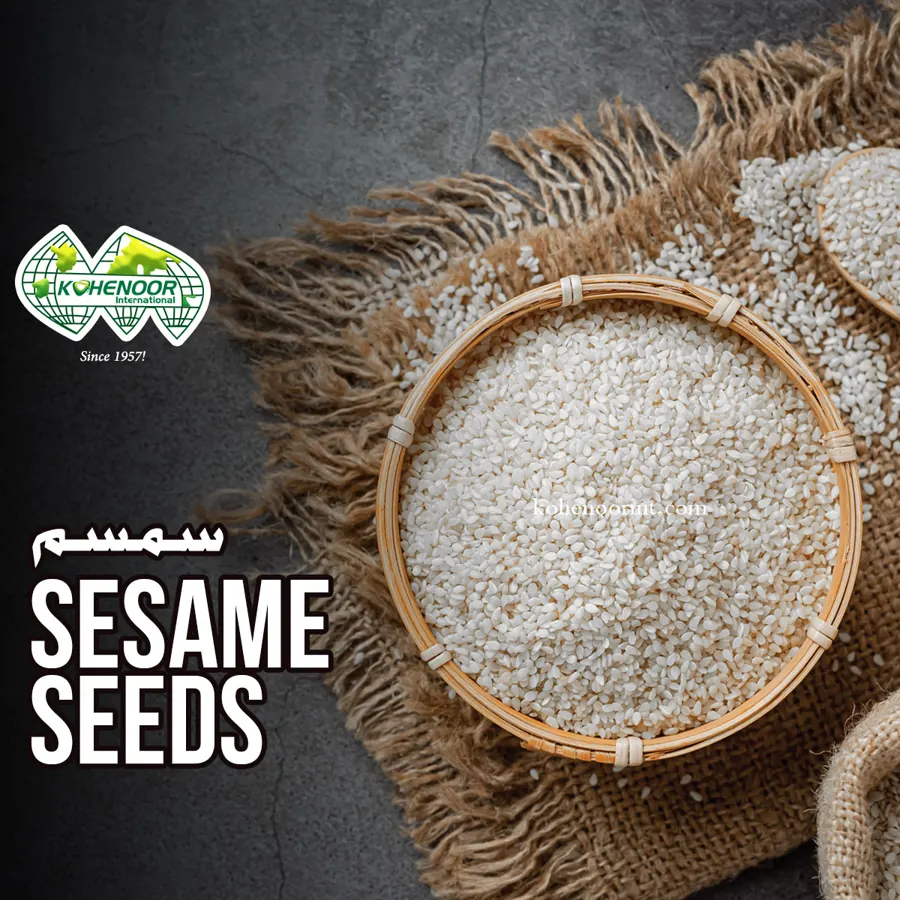
Botanical identity and type
Botanical name: Sesamum indicum L., Pedaliaceae.
Origin / type: Natural white, non-hulled sesame from Sindh and southern Punjab; open-pollinated Pakistani types.
Crop type: Annual oilseed; traded as edible seed for oil, tahini, hulling and bakery.
Sesame is a 90–120 day summer crop with capsules that split at maturity, which is why most Pakistani sesame is still hand-harvested and stooked before threshing. The white types grown in Sindh and Punjab have a thin seed coat, 48–52 % oil (mostly oleic and linoleic acid), 18–22 % protein and 1.0–1.5 % of the antioxidant lignans sesamin and sesamolin, which give the oil its stability. Seed size is 2.5–3.5 mm and 1,000-seed weight 2.8–3.5 g.
Exported seed is machine-cleaned to 99 % purity, optically sorted to remove discoloured and black seed, and shipped at 6 % moisture or less to prevent free-fatty-acid rise in transit. Sortex-grade lots achieve 99.5 % whiteness for hulling; standard grade is 98–99 % for oil pressing. Sesame is a declared allergen in the EU, UK, USA and Japan, and buyers there ask for Salmonella and pesticide-residue certificates with each lot; the microbial standards guide explains the testing.
The black sesame profile covers the higher-lignan type used in East Asia. Sesame is an oilseed rather than a forage, so the buying process is handled by the herb and seed site; the HS code table lists its heading.
Agronomy at a glance
Figures are typical ranges under good management; local trials should confirm rates for a specific site. Use the sowing rate tables to convert kg/ha to per-acre, per-feddan or per-jerib rates.
| Parameter | Typical range |
|---|---|
| Sowing rate | 3–5 kg/ha drilled; 5–7 kg/ha broadcast (typical) |
| Sowing depth | 1.5–2.5 cm on a fine seedbed |
| Row spacing | 30–45 cm rows, 10–15 cm within row |
| Days to harvest | 90–110 days; cut when lower capsules brown |
| Harvests per season | 1 |
| Yield, seed | 0.6–1.2 t/ha rainfed; up to 1.5 t/ha irrigated (typical) |
| Yield, stover | 2–3 t/ha dry |
| Oil / protein | 48–52 % oil; 18–22 % protein |
| Soil pH | 5.5–8.0; well-drained loam |
| Water need | 400–600 mm; very sensitive to waterlogging |
| Temperature | Optimum 25–35 °C; sow above 20 °C soil |
| Salinity tolerance | Low: threshold ECe ~2 dS/m |
| Seeds per kg | 290,000–350,000 |
Export seed standards
Standards below are those written on the ISTA-format test report issued with each export lot. See how purity and germination standards work and how to read the report.
| Parameter | Export standard | Method / note |
|---|---|---|
| Purity (sound, clean seed) | 99.0 % min (Sortex 99.5 %) | Machine-cleaned; optical sorted where stated |
| Moisture | 6 % max | Oven or calibrated capacitance meter at dispatch |
| Admixture / foreign matter | 1.0 % max (Sortex 0.5 %) | Stones, stalks, dust, other seed by weight |
| Germination | Not tested — edible/spice grade | Sowing-grade lots are tested on request (ISTA method) |
| Oil content | 48 % min | Soxhlet on composite sample |
| Free fatty acid | 2 % max (as oleic) | Rises with moisture; keep under 6 % moisture |
| Black / discoloured seed | 1 % max (Sortex 0.2 %) | Optical sorting |
Where it is grown
Sesame is sown in June–July after the wheat harvest in Sindh (Sanghar, Mirpurkhas, Nawabshah, Khairpur) and southern Punjab (Layyah, Bhakkar, Muzaffargarh) and harvested October–November. Cleaning and sorting run through December and new-crop white sesame ships from November.
Importing markets: China, Japan, South Korea, Türkiye, Germany, Netherlands, Italy, Spain, Poland, United Kingdom, United States, Brazil, Egypt. China, Japan and Korea take the largest volumes for oil and paste; Türkiye and the EU for tahini and bakery; the United States and Brazil for hulling and toppings.
Buying notes
White Sesame Seed is exported by Kohenoor International from Karachi and Port Qasim under HS 1207.40. Standard pack is 25 kg / 50 kg; minimum order 1 x 20ft. Harvest October–November; new-crop shipments from November through the following summer. Every shipment carries a phytosanitary certificate (Department of Plant Protection, Pakistan), a certificate of origin, an ISTA-format purity and germination report, packing list and invoice; fumigation certificate and COA on request.
Pricing, samples and shipment planning are handled on the specialist product site: herbnseed.com. For loading weights see the container capacity table; for destination paperwork see phytosanitary requirements by destination.
| Item | Detail |
|---|---|
| HS code | 1207.40 |
| Pack | 25 kg / 50 kg |
| Minimum order | 1 x 20ft |
| Purity / germination on report | 99% min / n/a (edible) |
| Shipping terms | FOB or CIF Karachi / Port Qasim |
| Specialist site | herbnseed.com |
Frequently asked questions
What oil content does Pakistani white sesame have?
Typically 48–52 % by weight, with about 40 % oleic and 45 % linoleic acid. The oil is naturally stable because of sesamin and sesamolin, which is why sesame oil keeps longer than most vegetable oils.
What is the difference between natural and hulled sesame?
Natural sesame keeps its thin seed coat; hulled sesame has the coat removed mechanically or by wet process, giving a whiter, softer seed for bakery. Pakistani export lots are natural (unhulled); Sortex grade is selected for hulling plants.
What moisture and FFA should I specify?
Moisture 6 % maximum and free fatty acid 2 % maximum as oleic. Higher moisture allows FFA to rise in transit, particularly on 30–40 day voyages to the Americas.
Is sesame an allergen?
Yes. It is a listed allergen under EU Regulation 1169/2011, UK law, the US FASTER Act and Japanese labelling rules. Importers there require allergen declarations and usually Salmonella-negative certificates for each lot.
What is the HS code for sesame seed?
HS 1207.40 (sesamum seeds). Each shipment carries a phytosanitary certificate, certificate of origin, packing list, invoice and, on request, a fumigation certificate and COA.
Need White Sesame Seed seed?
The knowledge base is maintained by Kohenoor International's agronomy team. Quotes for White Sesame Seed are handled by the export desk and the specialist site linked in the buying notes.
export@kohenoorint.com · +92 310 4929292 · Reply within 24 hours