 World Seed
Annual Ryegrass (Lolium multiflorum)
Annual ryegrass is the fastest-establishing winter grass: sown in autumn it is ready to cut in 50–60 days and gives four to six cuts of high-sugar, high-digestibility forage until summer heat. It is the grass partner for clover in Central Asian and Iranian winter mixtures. Agronomy, seed standards and growing regions follow.
Botanical identity and type
Botanical name: Lolium multiflorum Lam., Poaceae (Westerwold and Italian types).
Origin / type: Mediterranean-origin grass; diploid Westerwold-type annual multiplied in northern Punjab and KP for Central and West Asia.
Crop type: Annual cool-season grass for winter pasture, hay and silage.
Westerwold-type annual ryegrass heads in its first year without a cold requirement, so an October sowing reaches the first cut in 50–60 days and continues at 25–35 day intervals until temperatures pass 30 °C. Water-soluble carbohydrate of 15–25 % of dry matter makes it easy to ensile and highly palatable; crude protein is 14–20 % under 40–60 kg N/ha per cut. It tolerates −10 °C once tillered and is the winter grass for northern Iran, Afghanistan, Uzbekistan and Kazakhstan where berseem and alfalfa growth stops.
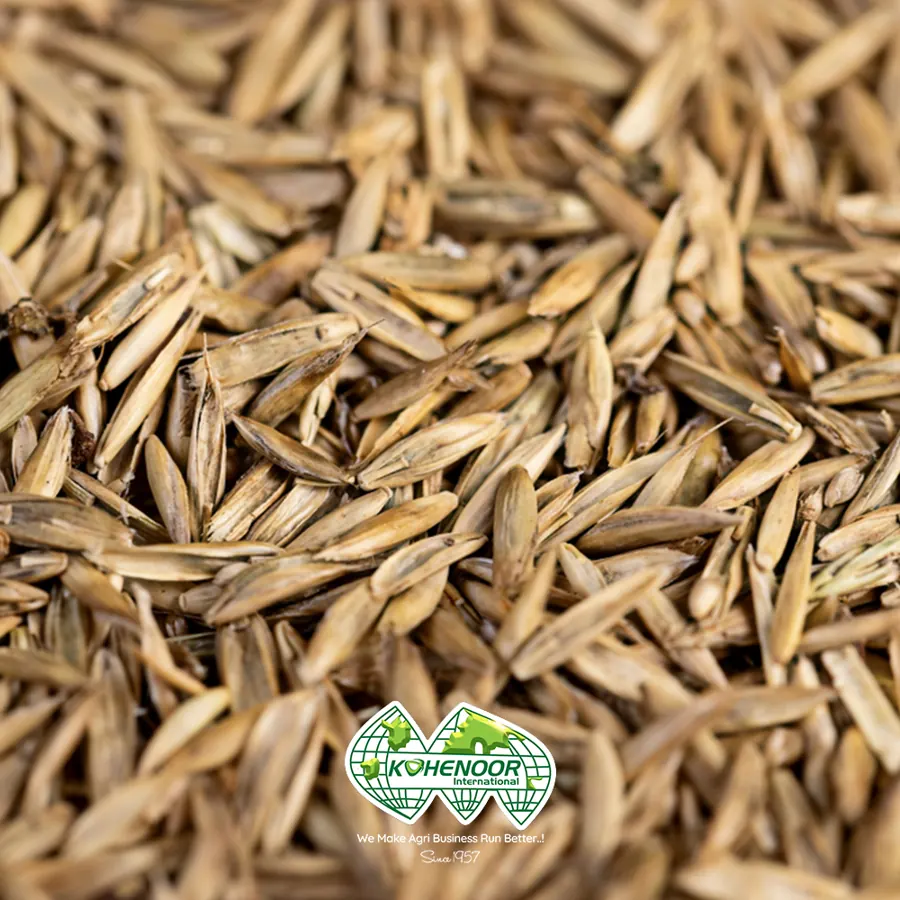
The seed is straw-coloured, 5–6 mm long, about 450,000–500,000 seeds per kg for the diploid type, and cleans easily to 98 % purity. Ergot and ryegrass endophyte are checked on export lots; Pakistani-multiplied seed is endophyte-free because the parent stock was.
Ryegrass is usually sown alone at 25–35 kg/ha or with Persian clover or berseem at reduced rates. It follows a summer sudan grass or maize crop in a year-round irrigated forage rotation. Its water and nitrogen demand are higher than the legumes; the forage comparison guide puts the figures side by side.
Agronomy at a glance
Figures are typical ranges under good management; local trials should confirm rates for a specific site. Use the sowing rate tables to convert kg/ha to per-acre, per-feddan or per-jerib rates.
| Parameter | Typical range |
|---|---|
| Sowing rate | 25–35 kg/ha alone; 15–20 kg/ha in clover mixtures (typical) |
| Sowing depth | 1–2 cm; rolled |
| Row spacing | Broadcast or 15–20 cm drill rows |
| Days to first cut | 50–60 days; then 25–35 days between cuts |
| Cuts per season | 4–6 (October sowing) |
| Yield, green | 50–80 t/ha per season (typical, irrigated with N) |
| Yield, dry matter | 10–15 t/ha per season |
| Crude protein | 14–20 % DM with 40–60 kg N/ha per cut |
| Soil pH | 5.5–7.5; tolerates to 8.0 |
| Water need | 600–900 mm over the season; irrigation every 10–14 days |
| Temperature | Optimum 10–25 °C; tolerates −10 °C once tillered; stops above 30 °C |
| Salinity tolerance | Low to moderate: threshold ECe ~3 dS/m |
| Seeds per kg | 450,000–500,000 (diploid) |
Export seed standards
Standards below are those written on the ISTA-format test report issued with each export lot. See how purity and germination standards work and how to read the report.
| Parameter | Export standard | Method / note |
|---|---|---|
| Pure seed (purity) | 98.0 % min | ISTA purity analysis on a 4-component working sample |
| Germination | 85 % min | ISTA between-paper or sand test, 4 x 100 seeds, normal seedlings |
| Moisture | 12 % max | ISTA oven method (low-constant temperature, 103 °C, 17 h) |
| Inert matter | 2.0 % max | Chaff, soil, broken pieces smaller than half seed |
| Other crop seed | 0.5 % max | Seeds of any other cultivated species |
| Weed seed | 0.2 % max | By number and identity on the report |
| Ergot (Claviceps) | Nil per 100 g | Visual and sieve check |
| Endophyte | Nil (endophyte-free parent stock) | Declared on request |
Where it is grown
Seed is multiplied in the cooler northern Punjab districts (Attock, Chakwal, Jhelum) and the Peshawar valley, sown in October and harvested in May–June; lots ship from June. Pakistan is a niche supplier to markets that want the diploid annual type at forage prices.
Importing markets: Iran, Türkiye, Uzbekistan, Kazakhstan, Afghanistan, Nepal. It is the winter forage grass of northern Iran, eastern Türkiye, Afghanistan and Central Asia, and is sown in Nepal's Terai for dairy cut-and-carry.
Buying notes
Annual (Italian) Ryegrass is exported by Kohenoor International from Karachi and Port Qasim under HS 1209.25. Standard pack is 25 kg; minimum order 1 x 20ft. New-crop seed ships from June for September–October sowing. Every shipment carries a phytosanitary certificate (Department of Plant Protection, Pakistan), a certificate of origin, an ISTA-format purity and germination report, packing list and invoice; fumigation certificate and COA on request.
Pricing, samples and shipment planning are handled on the specialist product site: kohenoorint.com. For loading weights see the container capacity table; for destination paperwork see phytosanitary requirements by destination.
| Item | Detail |
|---|---|
| HS code | 1209.25 |
| Pack | 25 kg |
| Minimum order | 1 x 20ft |
| Purity / germination on report | 98% min / 85% min |
| Shipping terms | FOB or CIF Karachi / Port Qasim |
| Specialist site | kohenoorint.com |
Frequently asked questions
Annual, Italian or Westerwold ryegrass — what is the difference?
All are Lolium multiflorum. Westerwold types are true annuals that head in the sowing year; Italian types are biennial and may persist a second year. Pakistani export lots are Westerwold-type annuals for one winter season.
How much nitrogen does ryegrass need?
For 4–6 cuts of 14–20 % protein forage, apply 30–40 kg N/ha at sowing and 40–60 kg N/ha after each cut, or grow it in a mixture with clover at reduced N.
Can ryegrass be grazed?
Yes, from 20–25 cm height, rotationally, leaving 5 cm residual. It withstands trampling better than clovers and is often strip-grazed by dairy cows in winter.
Is the seed endophyte-free?
Yes. The parent stock is endophyte-free and no Neotyphodium endophyte is present in Pakistani-multiplied lots, which matters for horse and sheep grazing.
What is the HS code for ryegrass seed?
HS 1209.25 (ryegrass seed, Lolium spp.). The phytosanitary certificate names Lolium multiflorum.
Need Annual (Italian) Ryegrass seed?
The knowledge base is maintained by Kohenoor International's agronomy team. Quotes for Annual (Italian) Ryegrass are handled by the export desk and the specialist site linked in the buying notes.
export@kohenoorint.com · +92 310 4929292 · Reply within 24 hours