 World Seed
Guar KN17 (Cyamopsis tetragonoloba)
KN17 is a branched, medium-duration guar selected for rainfed sowing in the arid belt of Sindh and Punjab. It yields 1.0–2.0 t/ha of seed with about 30 % galactomannan gum, and is sown in the Americas and China as planting stock for gum production. Agronomy, seed standards and growing regions follow.
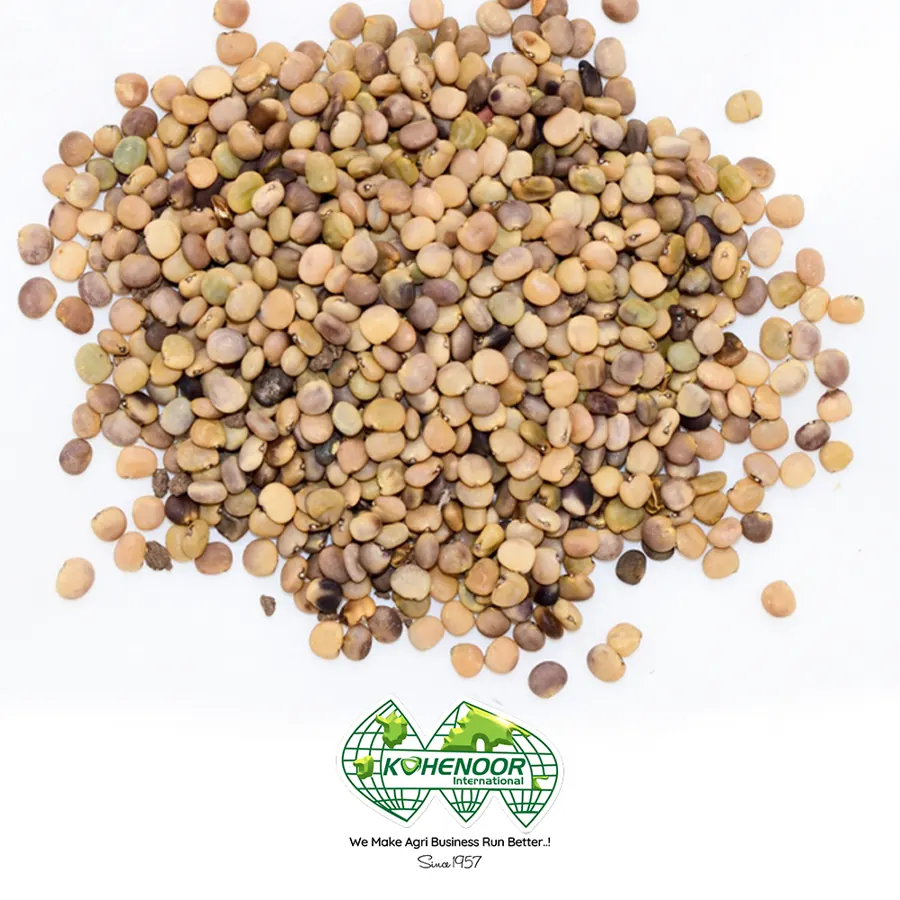
Botanical identity and type
Botanical name: Cyamopsis tetragonoloba (L.) Taub., Fabaceae.
Origin / type: Pakistani branched, medium-maturity guar selection for arid Sindh and Punjab; dual-purpose seed and fodder.
Crop type: Annual drought-tolerant legume for gum-grade seed, fodder and green manure.
Guar is a deep-rooted summer legume that sets pods on 300–500 mm of rain and tolerates 45 °C. KN17 is a branching type 60–100 cm tall that matures in 100–120 days, with pods clustered along the main stem and branches. Its seed endosperm is 28–32 % galactomannan, the gum used in food thickeners, hydraulic fracturing fluids and textile printing; the whole seed is about 30–33 % protein and the meal after gum extraction is a feed ingredient. Green plants cut at 60–70 days give 15–25 t/ha of fodder and the crop fixes 40–80 kg N/ha.
The seed is a rounded cube 3.5–5 mm across, cream, grey-white or pinkish. Export lots for sowing are graded over 3.5 mm screens to 99 % purity and tested to 85 % germination; gum-grade lots are sold on gum content and are covered on the guar seed site. Guar sown after mid-July in the northern hemisphere may not set seed before frost; sow between April and early July.
KN17 is the more branched, longer-season and fodder-friendly of the two exported selections; GumMaster is more determinate with higher gum. For legume fodder on the same sandy land in the monsoon season, compare sesbania; for conversions of the sowing rates below, see the sowing tables.
Agronomy at a glance
Figures are typical ranges under good management; local trials should confirm rates for a specific site. Use the sowing rate tables to convert kg/ha to per-acre, per-feddan or per-jerib rates.
| Parameter | Typical range |
|---|---|
| Sowing rate | 15–20 kg/ha in rows; 20–25 kg/ha broadcast rainfed (typical) |
| Sowing depth | 2–4 cm into moisture |
| Row spacing | 45–60 cm rows, 10–15 cm within row |
| Days to harvest | 100–120 days |
| Harvests per season | 1 seed harvest; or 1 fodder cut at 60–70 days |
| Yield, seed | 1.0–2.0 t/ha rainfed; up to 2.5 t/ha irrigated (typical) |
| Yield, green fodder | 15–25 t/ha at 60–70 days |
| Gum (galactomannan) content | 28–32 % of seed; protein 30–33 % |
| Soil pH | 7.0–8.5 |
| Water need | 300–500 mm; 1–2 supplementary irrigations lift yield |
| Temperature | Optimum 25–35 °C; tolerates 45 °C; frost kills |
| Salinity tolerance | Moderate: threshold ECe ~5 dS/m; sensitive to waterlogging |
| Seeds per kg | 28,000–35,000 |
Export seed standards
Standards below are those written on the ISTA-format test report issued with each export lot. See how purity and germination standards work and how to read the report.
| Parameter | Export standard | Method / note |
|---|---|---|
| Pure seed (purity) | 99.0 % min | ISTA purity analysis on a 4-component working sample |
| Germination | 85 % min | ISTA between-paper or sand test, 4 x 100 seeds, normal seedlings |
| Moisture | 10 % max | ISTA oven method (low-constant temperature, 103 °C, 17 h) |
| Inert matter | 1.0 % max | Chaff, soil, broken pieces smaller than half seed |
| Other crop seed | 0.5 % max | Seeds of any other cultivated species |
| Weed seed | 0.1 % max | By number and identity on the report |
| Seed size | > 3.5 mm screen | Small seed removed as inert |
| Gum content (on request) | 28 % min | Laboratory extraction on composite sample |
Where it is grown
Guar is grown on rainfed and lightly irrigated sandy land in Sindh (Tharparkar, Umerkot, Sanghar, Mirpurkhas) and southern Punjab (Bahawalpur, Rahim Yar Khan, Layyah), sown with the first monsoon rain in June–July and harvested October–November. Seed lots are ready from November.
Importing markets: Argentina, Brazil, Mexico, United States, China, India. Argentina, Brazil and Mexico grow it for gum-processing plants and as a rotation legume; the United States (Texas, Oklahoma) for oilfield gum; China and India buy planting stock and gum-grade seed.
Buying notes
Guar KN17 is exported by Kohenoor International from Karachi and Port Qasim under HS 0713.40. Standard pack is 25 kg; minimum order 1 x 20ft. New-crop seed ships from November; northern-hemisphere sowing April–July, southern-hemisphere October–January. Every shipment carries a phytosanitary certificate (Department of Plant Protection, Pakistan), a certificate of origin, an ISTA-format purity and germination report, packing list and invoice; fumigation certificate and COA on request.
Pricing, samples and shipment planning are handled on the specialist product site: guarseed.com. For loading weights see the container capacity table; for destination paperwork see phytosanitary requirements by destination.
| Item | Detail |
|---|---|
| HS code | 0713.40 |
| Pack | 25 kg |
| Minimum order | 1 x 20ft |
| Purity / germination on report | 99% min / 85% min |
| Shipping terms | FOB or CIF Karachi / Port Qasim |
| Specialist site | guarseed.com |
Frequently asked questions
What gum content does KN17 seed have?
Typically 28–32 % galactomannan by weight of whole seed. Gum content is determined mainly by variety and less by season; the endosperm fraction is about 35–40 % of the seed.
What is the difference between KN17 and GumMaster?
KN17 is branched, 100–120 days and suited to fodder as well as seed. GumMaster is more determinate and uniform, 90–110 days, with gum content of 32–35 % and better response to irrigation. For rainfed marginal land choose KN17; for irrigated gum production choose GumMaster.
Can guar be grown in Argentina and Brazil?
Yes. It is sown from October to January in the Chaco of Argentina and in the Cerrado and Nordeste of Brazil on sandy soils with 400–600 mm of summer rain. Photoperiod sensitivity is low in these selections, so day length is not limiting between 15° and 35° latitude.
Does guar need inoculation?
Guar nodulates with the cowpea-group rhizobia present in most tropical and subtropical soils. Inoculation is recommended on land that has never grown legumes; ask for inoculated seed at order.
Which HS code applies to guar seed?
Guar seed for sowing and for gum is HS 0713.40 (guar seeds); guar gum itself is HS 1302.32. Each shipment carries a phytosanitary certificate, certificate of origin and test report.
Need Guar KN17 seed?
The knowledge base is maintained by Kohenoor International's agronomy team. Quotes for Guar KN17 are handled by the export desk and the specialist site linked in the buying notes.
export@kohenoorint.com · +92 310 4929292 · Reply within 24 hours