 World Seed
Castor (Ricinus communis)
Castor seed carries 45–50 % oil in which ricinoleic acid makes up 85–90 %, the only commercial source of that hydroxy fatty acid and the reason castor oil goes into lubricants, polyamides, biodiesel additives and pharmaceuticals rather than food. The seed is large (1000-seed weight 250–400 g), the meal left after crushing contains the toxin ricin, and the trade runs under HS 1207.30. This page gives the agronomy, the crushing and sowing-grade specifications and where the crop is grown and sold.
Botanical identity and type
Botanical name: Ricinus communis L., Euphorbiaceae.
Origin / type: Tropical African shrub; bold-seeded open-pollinated Pakistani types and hybrids multiplied in Sindh and Punjab.
Crop type: Annual to short-lived perennial oilseed grown for crushing (castor oil) and as sowing seed.
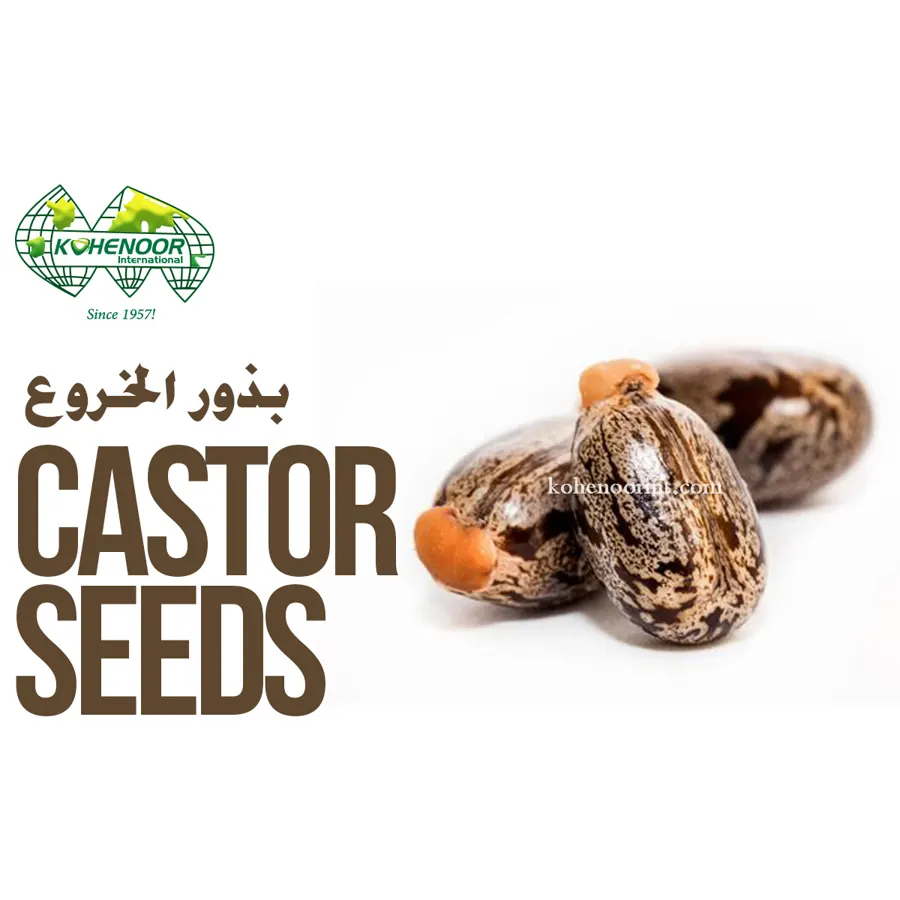
Castor is a fast-growing 1.5–3 m shrub with large palmate leaves and spikes of spiny capsules, each holding three mottled seeds 10–15 mm long. Bold open-pollinated types branch and ripen spikes in sequence, so the crop is picked three to five times from 120 days onward; hybrids are shorter, more uniform and give 2.5–3.5 t/ha under irrigation against 1.0–2.0 t/ha for rainfed bold types. The plant tolerates heat, drought and poor soil but not waterlogging, frost or salinity above about 4 dS/m. Capsules are dried and hulled mechanically; the seed is then cleaned and graded by size.
Two grades are exported. Crushing grade is specified on oil content (45 % minimum by Soxhlet), moisture (8 % maximum), free fatty acid (2 % maximum) and admixture, and is shipped in 50 kg bags to oil mills in China, India and Europe. Sowing grade adds an ISTA germination test at 85 % minimum, size grading and phosphine-only fumigation. Castor seed and dust are toxic and allergenic: ricin, a ribosome-inactivating protein, is in the endosperm and stays in the meal after crushing, so the meal is used as organic fertiliser or detoxified by heat before any feed use, and handlers wear dust masks. Whole seed must never be fed or eaten. The oil itself contains no ricin.
Castor is grown on the same sandy, rainfed land as guar and sesame and follows them in rotation. Specifications for the crushing trade are handled on the herb and seed site; the HS code table lists its heading and the storage guide the moisture limit for oilseeds.
Agronomy at a glance
Figures are typical ranges under good management; local trials should confirm rates for a specific site. Use the sowing rate tables to convert kg/ha to per-acre, per-feddan or per-jerib rates.
| Parameter | Typical range |
|---|---|
| Sowing rate | 10–15 kg/ha bold open-pollinated types; 5–8 kg/ha hybrids (typical) |
| Sowing depth | 5–7 cm into moisture |
| Row spacing | 90 cm rows, 45–60 cm within row; 60 × 30 cm for hybrids |
| Days to harvest | First spike 110–130 days; picking continues to 180–210 days |
| Harvests per season | 3–5 pickings; ratoon possible in frost-free zones |
| Yield, seed | 1.0–2.0 t/ha rainfed bold types; 2.5–3.5 t/ha irrigated hybrids (typical) |
| Yield, stalk | 3–5 t/ha dry |
| Oil / protein | 45–50 % oil (ricinoleic acid 85–90 %); 18–20 % protein (meal 30–35 %) |
| Soil pH | 6.0–8.0; sandy loam, well drained |
| Water need | 500–700 mm; 2–3 irrigations at flowering and capsule fill lift yield |
| Temperature | Optimum 20–32 °C; tolerates 40 °C; frost kills |
| Salinity tolerance | Moderate: threshold ECe ~4 dS/m |
| Seeds per kg | 2,500–4,000 (1000-seed weight 250–400 g) |
Export seed standards
Standards below are those written on the ISTA-format test report issued with each export lot. See how purity and germination standards work and how to read the report.
| Parameter | Export standard | Method / note |
|---|---|---|
| Pure seed (purity) | 99.0 % min | ISTA purity analysis on a 4-component working sample |
| Germination | 85 % min (sowing grade); n/a for crushing grade | ISTA between-paper or sand test, 4 x 100 seeds, normal seedlings |
| Moisture | 8 % max | ISTA oven method (low-constant temperature, 103 °C, 17 h) |
| Inert matter | 1.0 % max | Chaff, soil, broken pieces smaller than half seed |
| Other crop seed | 0.5 % max | Seeds of any other cultivated species |
| Weed seed | 0.1 % max | By number and identity on the report |
| Oil content | 45 % min | Soxhlet on composite sample; stated on COA |
| Free fatty acid | 2 % max (as ricinoleic) | Rises with moisture; keep under 8 % |
| Damaged / immature seed | 2 % max | Gravity table and hand check |
| Fumigation | Phosphine only for sowing grade | Methyl bromide reduces germination |
Where it is grown
Castor is sown with the monsoon in July–August in Sindh (Tharparkar, Umerkot, Sanghar, Mirpurkhas) and southern Punjab (Bahawalpur, Rahim Yar Khan) and picked from December to March; a spring sowing in February–March is harvested from July. Hulling, cleaning and grading run through the winter and new-crop seed ships from January.
Importing markets: China, India, Germany, Netherlands, France, Brazil, United States. China and India take crushing grade for oil; Germany, the Netherlands and France for oleochemical and pharmaceutical oil; Brazil and the United States buy sowing seed and bold types for breeding and contract production.
Buying notes
Castor Seed is exported by Kohenoor International from Karachi and Port Qasim under HS 1207.30. Standard pack is 50 kg; minimum order 1 x 20ft. Harvest December–March; new-crop crushing and sowing lots ship from January. Every shipment carries a phytosanitary certificate (Department of Plant Protection, Pakistan), a certificate of origin, an ISTA-format purity and germination report, packing list and invoice; fumigation certificate and COA on request.
Pricing, samples and shipment planning are handled on the specialist product site: herbnseed.com. For loading weights see the container capacity table; for destination paperwork see phytosanitary requirements by destination.
| Item | Detail |
|---|---|
| HS code | 1207.30 |
| Pack | 50 kg |
| Minimum order | 1 x 20ft |
| Purity / germination on report | 99% min / 85% min (sowing grade) |
| Shipping terms | FOB or CIF Karachi / Port Qasim |
| Specialist site | herbnseed.com |
Frequently asked questions
What oil content does castor seed have?
45–50 % by weight, with ricinoleic acid at 85–90 % of the fatty acids. It is the only commercial source of this hydroxy fatty acid, which gives castor oil its viscosity and use in lubricants, polyamide-11, sebacic acid and pharmaceuticals.
Is castor seed toxic?
Yes. The endosperm contains ricin, a highly toxic protein, and the seed coat carries allergens. Whole seed must not be eaten or fed, handlers should avoid dust, and the meal after crushing is used as fertiliser or heat-detoxified before feeding. The extracted oil contains no ricin.
What is the 1000-seed weight of castor?
250–400 g for bold types, giving 2,500–4,000 seeds per kilogram. Hybrids are usually at the lower end. That large seed is why sowing rates of 10–15 kg/ha give only 20,000–30,000 plants per hectare at 90 × 45 cm spacing.
Crushing grade or sowing grade?
Crushing grade is sold on oil content, moisture, free fatty acid and admixture. Sowing grade adds an ISTA germination test at 85 % minimum, size grading and phosphine-only fumigation. State the intended use on the enquiry so that the certificate of origin and phytosanitary certificate are worded to match.
What is the HS code for castor seed?
HS 1207.30 (castor oil seeds). Castor oil is HS 1515.30 and castor meal (oil-cake) HS 2306.90. Each shipment carries a phytosanitary certificate, certificate of origin, COA and, for sowing grade, an ISTA-format germination report.
Need Castor Seed seed?
The knowledge base is maintained by Kohenoor International's agronomy team. Quotes for Castor Seed are handled by the export desk and the specialist site linked in the buying notes.
export@kohenoorint.com · +92 310 4929292 · Reply within 24 hours